

It’s been almost two years since Not Your China Doll was released into the world and I’m still meeting film scholars and Anna May Wong fans from around the world who have so much to teach me. Marc David Jacobs is one of those people and his expertise in lesser known figures—people of color, women, queer folks—from early British cinema is quite impressive. We met at the bar in the BFI Southbank’s chic lobby with a band of other AMW aficionados (which you can read all about in my London recap), where he enthralled me with the backstory of how AMW came to film two different versions of her sketch in Elstree Calling.
Marc David is a self-described “film nerd” who has given talks on British film history at the BFI Reuben Library and Hippodrome Festival of Silent Cinema. He’s done interviews on the Jamaican-British actor Lucius Blake (who has an important cameo in Piccadilly) for BBC World Service and The Guardian, in addition to film commentary for numerous Blu-rays. He was also one of the presenters for the BFI’s Anna May Wong season and participated in a discussion with Xin Peng after the screening of Java Head. You can read his articles on Anna May Wong and Terence Davies on the BFI website here. He is putting all this knowledge to work by writing a book about 1929 and the people behind the first wave of British sound films. And he informs me that he may very well be the last person left in the UK who’s never owned a mobile phone. How charmingly old-fashioned!
Of course, I had to know all the details behind the Elstree Calling story and the other revelations from our initial conversation. Marc David may not own a cell phone but he was more than happy to answer all my burning questions over email.
As a self-proclaimed film nerd, tell us about your work and how Anna May Wong has figured into it?
For me, being a film nerd is all about being an enthusiastic amateur; the opposite of film scholars who went to university and came back with professional qualifications, which I never did. I’ve got no head for academia, and I suspect the feeling’s mutual. My film education came from video stores, DVD commentaries and brilliant friends—some of whom did get an education, so I guess I got one secondhand. (Like anything secondhand, this meant I got the same things they did, only a lot cheaper.) I was lucky that I got to follow wherever my interests led me, which was eventually to old British films. I fell in love with them, and watched everything I could get my hands on, until I finally quit my office day job and moved to the UK in 2011. I’ve been making my way in film exhibition ever since, and writing and talking about British film history to anyone who’ll listen!
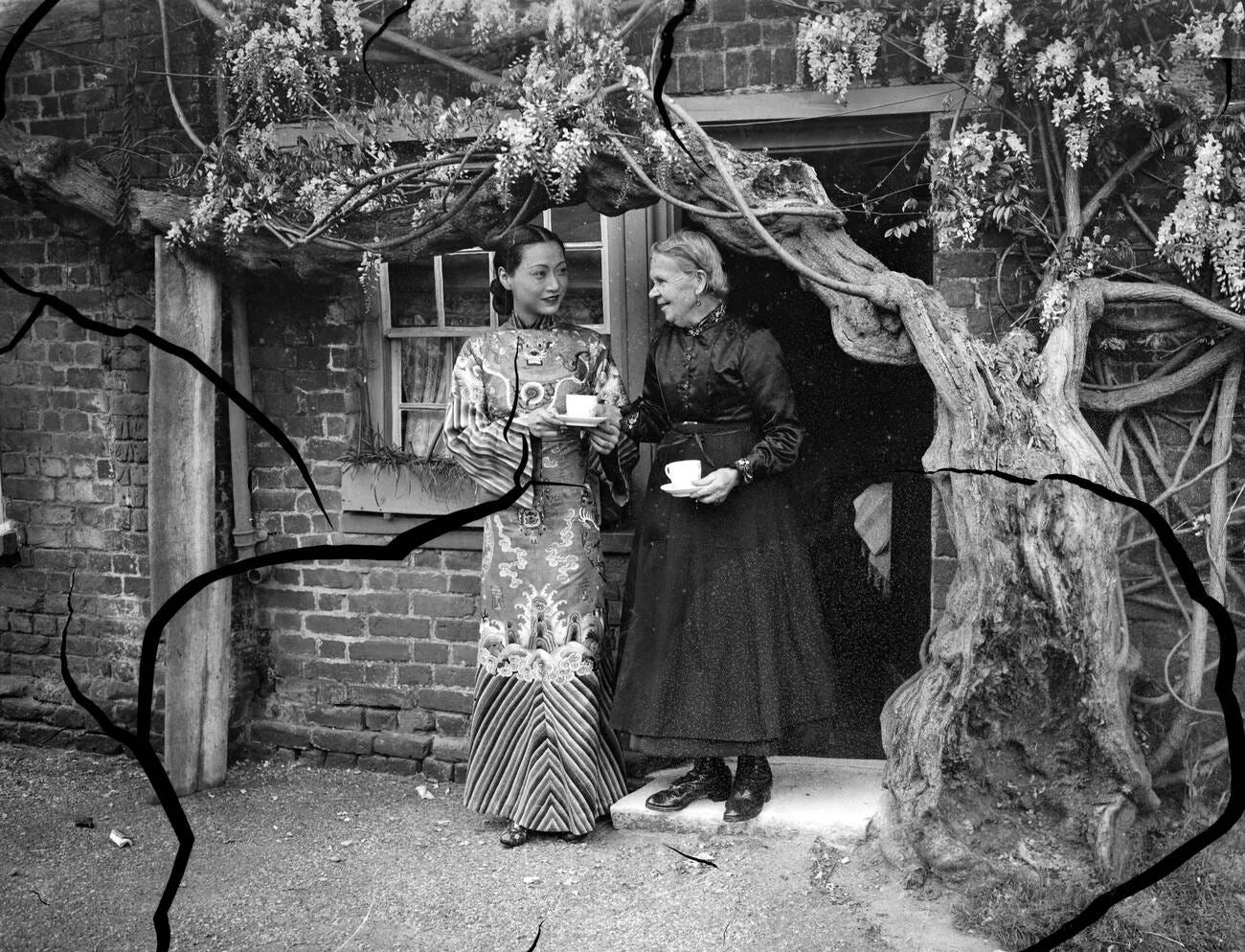
My favourite period of cinema is that first decade of British talkies, from 1929 to 1939, which is usually looked down on as this kind of wasteland of unwatchable films by unknown directors featuring forgettable actors. These assumptions mean they’ve been almost completely overlooked by proper historians, ignoring just how many interesting people were working then, including disabled filmmakers, women, queer people, and dozens if not hundreds of actors and creatives of colour. Being mixed-race myself, I’ve been especially amazed to discover how many other mixed-race people were working in practically every field of the British film industry at that time. Many at the top adopted ‘white’ names: for example, the half-Japanese director Shigetaro Mishiku (who first half-changed his name to Richard Mishiku, then finally became Richard Manning), or the half-Burmese producer Odette Ba-Thit (who worked under her married name, Odette King). Others have simply been ignored, like the brilliantly multi-hyphenate actor-producer-acrobat Lai Foun.
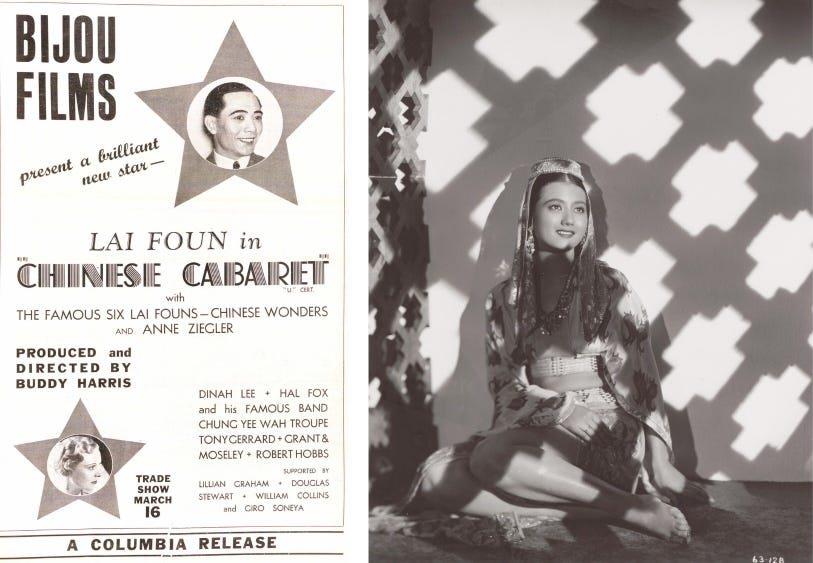
AMW’s position within this period of British cinema really can’t be overstated: she was the UK’s first star of colour to sustain a leading career across a series of talkies. Indeed, she was probably the only ‘openly’ global majority star of British cinema through the first half of that decade (Merle Oberon being a distinctly tragic exception), and in this respect she could be said to have paved the way for the many others who followed in the later 1930s. They included well-known icons like Paul Robeson or Sabu, but also those like the long-forgotten Malaysian-born Stella Moya, who was arguably seen as a potential successor after AMW left her British career behind.
I’m fascinated by all of the mixed-race film people you just mentioned, who I’m hearing about for the first time. It’s interesting but also sobering to think about how easily mixed identities disappear or get erased from the official record.
I was equally impressed with some of the research you did on Anna May Wong. You were able to go much deeper into the making of her British films—like Java Head, Chu Chin Chow, and Tiger Bay—which for the narrative’s sake, I could only give cursory attention to in my book. I was especially intrigued by a few details you mentioned tantalizingly during our chat in between films at the BFI. What were some of the most interesting tidbits you found on this period in her career? And which archives did you pull from?
My starting point for talking about someone like AMW’s time here always comes down to establishing the specific British context they were working in. And particularly with those three films of 1933-1934, there’s quite a lot that had been going on just before her return. For one thing, there had been kind of a questionable Chinese boom in British cinema, if anyone now could believe such a thing: between 1930 and 1932 alone came The Woman from China, The Yellow Mask, The Chinese Bungalow, In a Lotus Garden, Down River, My Old China, Chin Chin Chinaman, Stranglehold, The Chinese Puzzle, and Tin Gods.
With some exceptions, these were unsurprisingly largely Sinophobic representations, often centred on Chinese villains of the Fu Manchu variety, played in yellowface—although it’s worth pointing out that they also differed in many ways from the ‘yellow peril’ tropes of their American contemporaries. But the result was an uproar from Britain’s Chinese community, led especially by Chinese student organisations. Their views were represented by no less than China’s top diplomat in London, Yang Guangsheng: although he resisted calls to intercede directly with British film producers, he would write a remarkable protest letter to the popular magazine Film Weekly, which afterwards advocated for better Chinese representation in British films. And, although it’s impossible to prove with any certainty, it seems likely that this had a direct impact on the kinds of films AMW was able to make when she returned to Britain in 1933.
I think those films have often suffered from being seen only in isolation, in the context of their American contemporaries, rather than through the particular lens of British cinema. To take one obvious example, there are AMW’s repeated suicides in her British films, which indeed sit firmly alongside several male Chinese suicides as depicted in Tin Gods and The Chinese Puzzle, amongst others. But, at the same time, they’re also part of a wider set of tropes that span the whole of British cinema of this period, something I’ve thought a lot about from a mental health perspective. Films like Tiger Bay—my personal AMW favourite—slot perfectly into an extremely familiar pattern of characters nobly throwing away their lives (or, in lesser cases, their happiness or reputation) for the welfare of those they love, which I think must have a great deal to do with the fact that these were films being made largely by filmmakers and for audiences who had so recently survived four years of the First World War. So, in this light, Lui Cheng is entirely interchangeable with characters like Lillian Hamilton in Frail Women (1932) or the hotel night manager (and former Grand Duke) Anton in Open All Night (1934), both of whom similarly sacrifice themselves for a daughter or daughter figure. Although, to be fair, neither of them has an apparently standard-issue poison ring.
Ha! Tiger Bay is also one of my favorites (I put it in my top ten) but the poison ring always seemed ridiculously over the top. It makes more sense when you know that a whole slew of British films were preoccupied with characters who sacrifice themselves for the people they love.
One key thing that affected AMW’s work here was the spectre of censorship, invoked by the British Board of Film Censors (BBFC, which still operates today, although their ‘C’ now stands for ‘Classification’). It’s unfortunate that AMW’s time here would overlap almost perfectly with the tenure of the BBFC’s most reactionary president, Edward Shortt (1929-1935), who was himself caught between equally-virulent criticism from both the left- and right-wing press. Piccadilly had aroused enormous controversy, with complaints made about it in private Parliamentary meetings by elected politicians from both sides of the political spectrum. The result was a ban on so-called ‘parti-coloured kissing’, which seems to have only ever been applied to Piccadilly‘s spiritual sequel, The Flame of Love. This in turn sparked outrage from the opposite direction—partly fuelled by British International Pictures (BIP), who cynically sought to gain some free publicity from it. But probably the most inspired result came in the form of a 24-line poem, ‘Advice to Anna May Wong’, written by Yan-Phou Lee and published in The China Weekly Review.
Censorship would rear its head again for both Tiger Bay and Java Head, although neither would have anything to do with AMW’s performances. Tiger Bay was initially to have been set in a similar Limehouse milieu to the one Shosho calls home in Piccadilly, leading the censors to reject the initial script outright, calling it ‘an exact replica of the worst type of American gangster film’. The film’s screenwriter, Billie Bristow, then embarked on a week-long charm offensive against the BBFC, the result of which was the film’s ultimately being relocated to South America, but otherwise being left more or less untouched. Java Head, on the other hand, fell foul of censorial interdictions against drug references, which led to the very obvious last-minute cuts and overdubs which can still be seen and heard in it today. And we never do get to find out what’s in Edward Dunsack’s mysterious travel chest.... (Incidentally, the actor who played him was none other than George Curzon, who’d previously appeared as AMW’s onstage brother in The Circle of Chalk.)
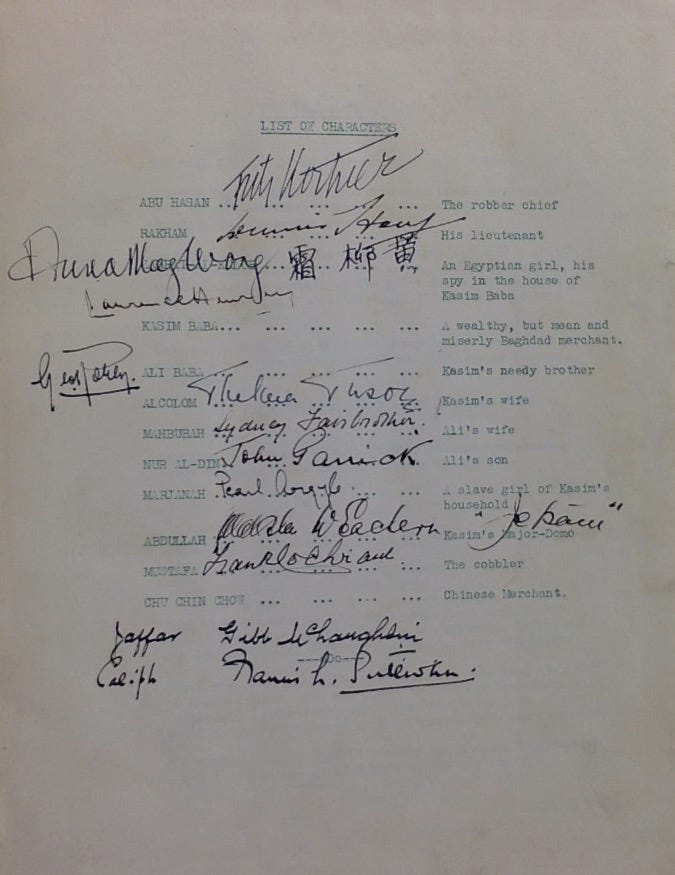
In terms of sources, practically all the above information has come out of regular research viewing sessions at BFI Stephen Street, or visits to the BFI National Archive in Berkhamsted, about a half-hour train ride from London. The archives hold everything from the only surviving early BBFC records to the studio files of Basil Dean (the producer of Java Head), all of which are a trove to anyone researching this period in British cinema. They even have director Walter Forde’s copy of the Chu-Chin-Chow screenplay, signed by every member of the cast including AMW.
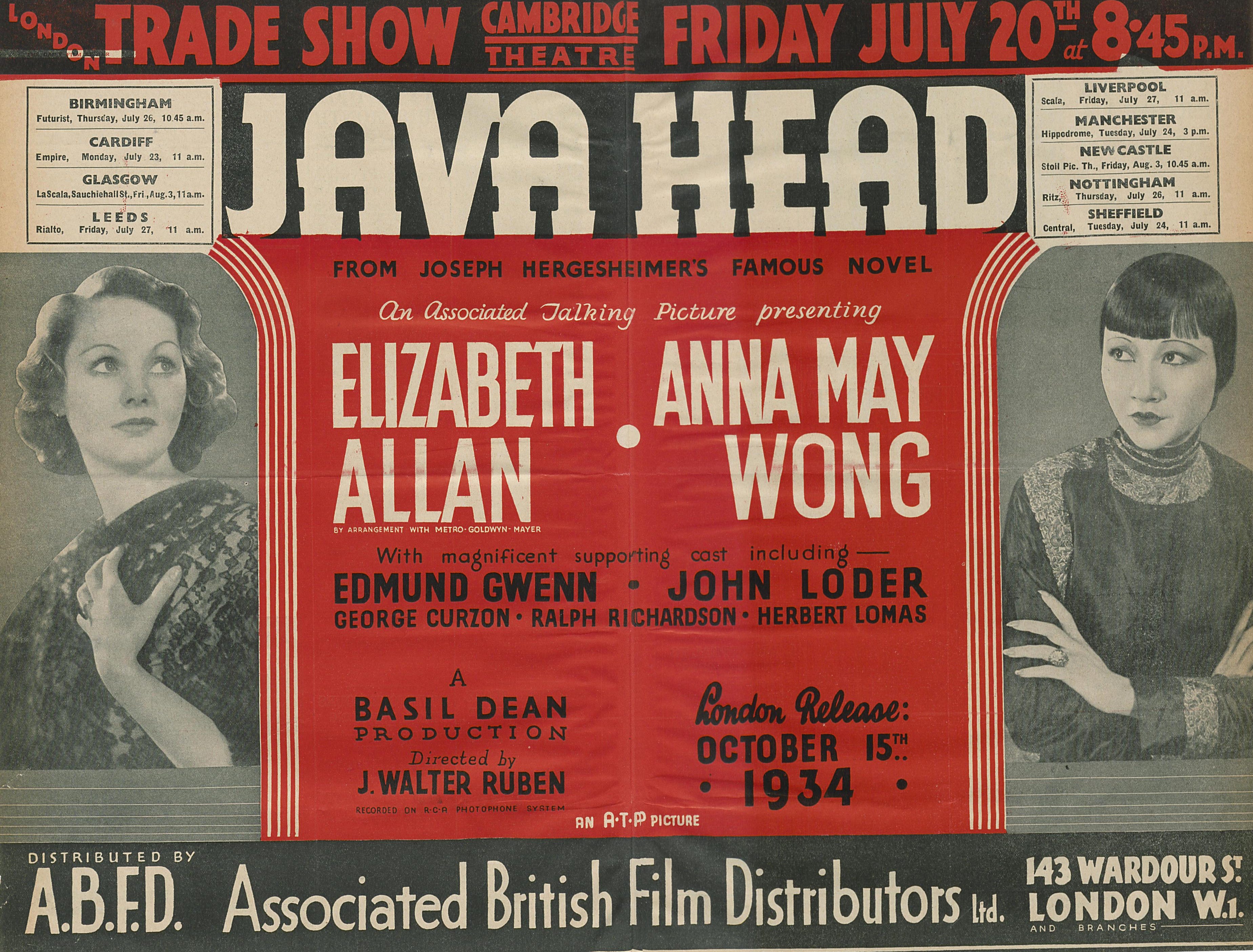
You also mentioned that the screenwriter for Java Head was himself of mixed racial heritage and Chinese ancestry. (For those who are not familiar, the film is about a British sailor who shocks his community when he brings home a Manchu princess as his wife.) What did you learn about Gordon Wellesley Wong? Some dislike the film and feel it’s demeaning to Asians in many ways. And of course, there’s the fact that AMW—despite getting her first on-screen kiss—still dies in the end. How do you think Wellesley’s perspective shaped the script that was ultimately shot?
It’s worth noting that the real driving force behind the 1934 film of Java Head was AMW herself: in many ways, it was to be the success story for her that The Good Earth never was, perhaps even the one that convinced her to stake so much on the latter film, both emotionally and professionally. As early as 1931, Java Head was being mentioned as Paramount’s follow-up to Daughter of the Dragon, and it’s immediately clear that she was the one campaigning for the film to be made, and with her as its star. Like The Good Earth, the 1918 novel and its author were hugely popular, as was a silent American film adaptation in 1923. So when her remake was dropped, it was AMW who took it with her across the Atlantic, convincing British studio ATP (forerunner of Ealing Studios) to pick up Paramount’s unwanted property.
This was fortunate in that it meant the screenplay by Martin Brown was dropped in favour of one by Gordon Wellesley, then a newly-minted ATP staff writer, recently arrived from Kuala Lumpur by way of a brief stop in Hollywood. And of course, while it’s again impossible to know for certain, I firmly believe it was Wellesley who would have been behind several crucial changes to the story—most significantly, in making the film’s marriage a genuine love match. In the original novel, the marriage takes place out of a kind of pity, the sailor being quasi-inveigled into it as a way to supposedly avoid an honour killing; in the silent film, it’s predictably even more hackneyed: a kind of damsel-in-distress rescue operation. In both, it’s very clear that there has never been any romantic attraction by the (originally American) sailor for his Chinese wife—heaven forbid! That kiss between AMW and John Loder, however tame, signals a mutual romantic attraction that is totally one-sided in all previous versions of the story—and, to my mind, it’s largely or entirely Wellesley’s doing.
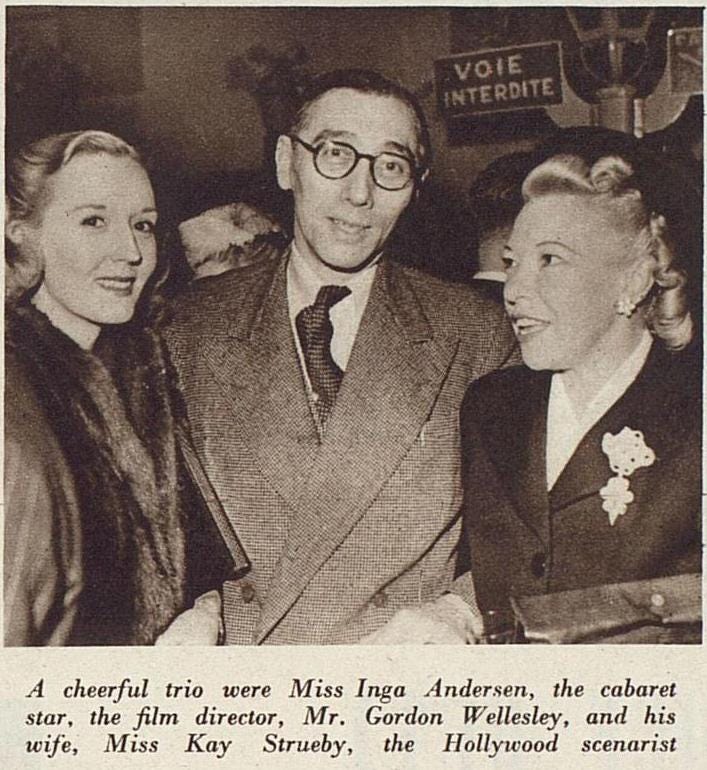
What a coup! It may not seem like much to our modern sensibilities, but that is such a win for representing interracial relationships on-screen. And to think this film was made three decades before Guess Who’s Coming to Dinner in 1967.
For me, the proof is that Wellesley did the exact same thing six years later, in his 1940 adaptation of The Chinese Bungalow, a popular play that had twice before been adapted for cinema. Here, the story centres on the marriage between a wealthy Chinese man and a white British woman, but while the previous versions begin with the marriage already deteriorating (or, in the case of its 1926 silent version, with the woman’s kidnapping and coercive marriage), it’s only Wellesley’s film that supplies a genuinely romantic backstory for the couple, once again showing the mutual attraction between the mixed-race couple, as well as their initially happy life together before the melodramatic developments of the source material inevitably reassert themselves.
Like countless other figures from the early decades of British cinema, there’s been almost nothing written about Wellesley’s personal life or background, and what little is out there is often riddled with errors and guesswork. But his birth certificate shows that he was born in a suburb of Sydney in December 1893 as Willsley Gordon Wong Goldtown: his mother was probably white, and born in South Africa; his father was Wong Haw-Tsing, born in Hong Kong in 1864, who adopted the name William Goldtown. He appears to have operated as a commission agent and translator in Chinese-Australian trade, but the majority of what we know about his life comes largely from contemporary police reports, in which he regularly appears as both perpetrator and victim. A remarkable background for someone whose son would go on to become a prolific screenwriter, occasional producer and director—and, in 1942, probably the first writer of colour ever nominated for an Oscar.
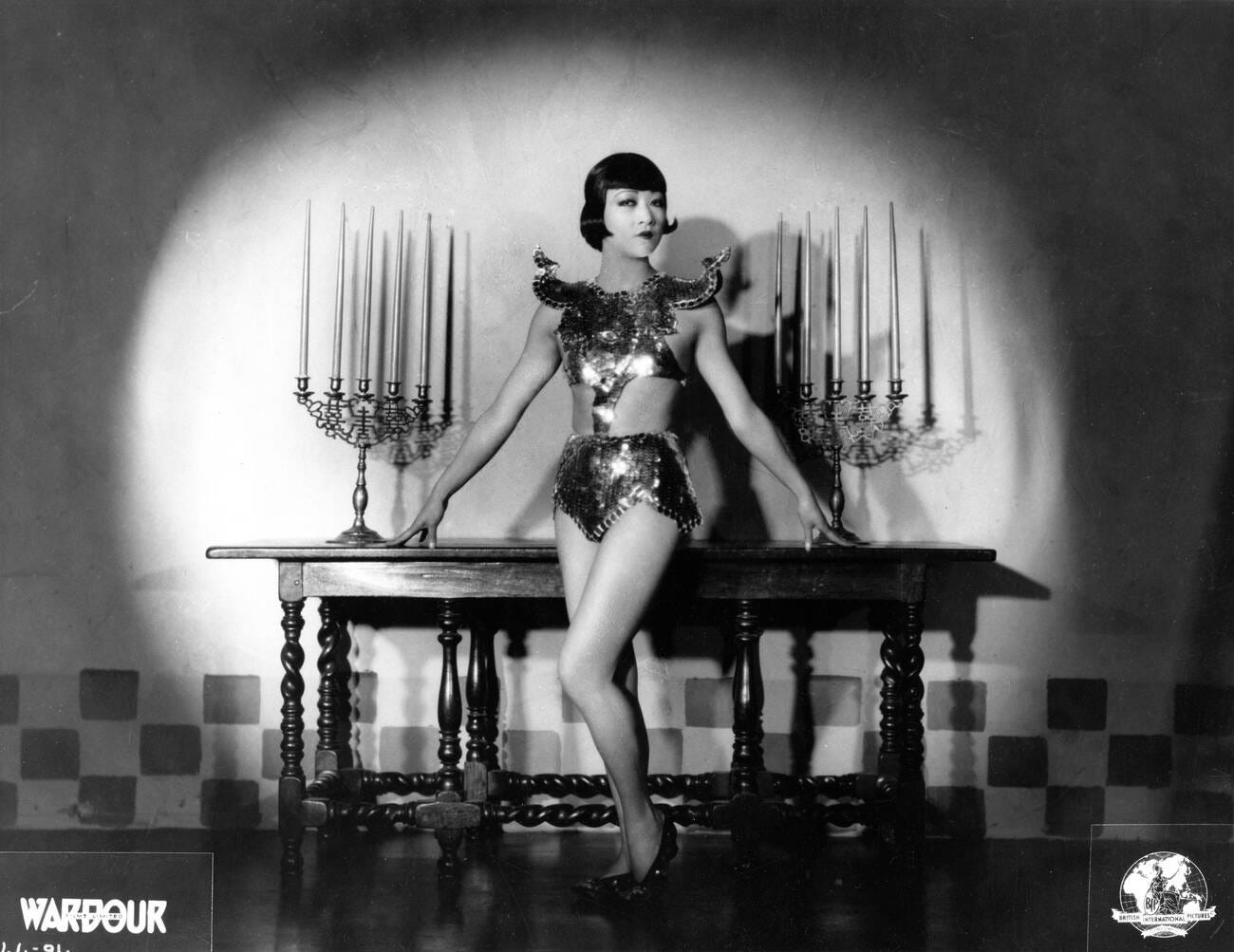
Talk about hidden history! That’s impressive. Another question you answered for me was the double credit for the British variety show talkie Elstree Calling that AMW appeared in in 1930. Both Adrian Brunel and Alfred Hitchcock were given credit as directors but it was never clear to me who AMW actually worked with. It turns out both of them! Though Brunel seems to be the one who got a raw deal. I wonder if you could give us the cliff notes on this little episode in AMW’s career?
So, the backstory is that Brunel was a leading light in 1920s British cinema, able to turn his hand to practically any genre, from proto-science-fiction to tearjerker melodramas, but with a particular talent for really clever, often very sophisticated humour. He was able to produce several films independently in the cheaper silent era, but once sound came in, the power shifted to studios like BIP, who brought Brunel in as a director-for-hire on Elstree Calling. But while Brunel was determined to be just as innovative with the talkies as he had been in the silents, BIP was only concerned with churning out a cheap money-spinner as quickly as possible, given that no one was certain by this point whether sound would actually stick, or if it was only a passing fad to be cashed in on while it lasted. (The jury’s still out on that one.)
Brunel’s extensive personal archive is yet another held by the BFI, and reveals all his original ambitions for the film, which would’ve been something more like Monty Python meets the Marx Brothers than the completed product. There would even have been several sequences in which Brunel was to appear onscreen as the film’s hapless director, surrounded by a chorus of studio yes-men—something BIP probably weren’t too happy about. In the midst of the film’s chaotic shooting, someone appears to have noticed that AMW was busy making The Flame of Love nearby (you can even spot its elaborate stage sets in Elstree Calling’s opening sequence), and dutifully dashed off The Taming of the Shrew sketch for her to appear in.
The two drafts of its script—written in January 1930, a mere four weeks before the film’s premiere—show a sketch that was much more in the style of Brunel’s subtler humour. AMW was to appear throughout, dressed ‘in the correct costume of Catherina’, rather than as a punchline in her anachronistic Piccadilly outfit, and would have exchanged several passages of surreal Shakespearean dialogue with the other actors, rather than kicking a few hapless chickens and shouting choice phrases in Taishanese. According to Brunel’s 1949 memoirs, the scene was duly filmed as written, but no sooner was shooting completed than BIP threw out all of his detailed editing plans, recut the entire film and even brought in a jobbing Alfred Hitchcock to hastily reshoot a handful of sketches, including the Shrew, leaving Brunel’s version on the cutting room floor. The disillusioned Brunel, who wasn’t even invited to the premiere, didn’t make another film for three years.
Your research has also focused on other people of color working in the British film industry at the time. Who were some of the other East Asian figures who might have brushed shoulders with AMW?
Well, her closest film-adjacent friend in Britain was probably the Cantonese restaurateur Ah-On Ley, a fascinating figure who was also a successful racehorse owner, a somewhat less successful film producer, and alongside all that managed to find time to play bit parts in over sixty films, including at least two with AMW. He’s usually credited as Ley On, but appears as ‘J. Leyon’ in The Flame of Love as Wang Hu, AMW’s impetuous brother with terrible aim. He then turns up again three years later as her servant, Ho Tang, in Tiger Bay, but their companionship continued even when they weren’t onscreen together. The pressbook for Chu-Chin-Chow contains an item revealing that, despite AMW being ‘a connoisseur of European food and wine’, her on-set catering ‘consisted of exquisite Oriental dishes specially prepared and sent to the studio by her old friend, Mr Li [sic] On’.
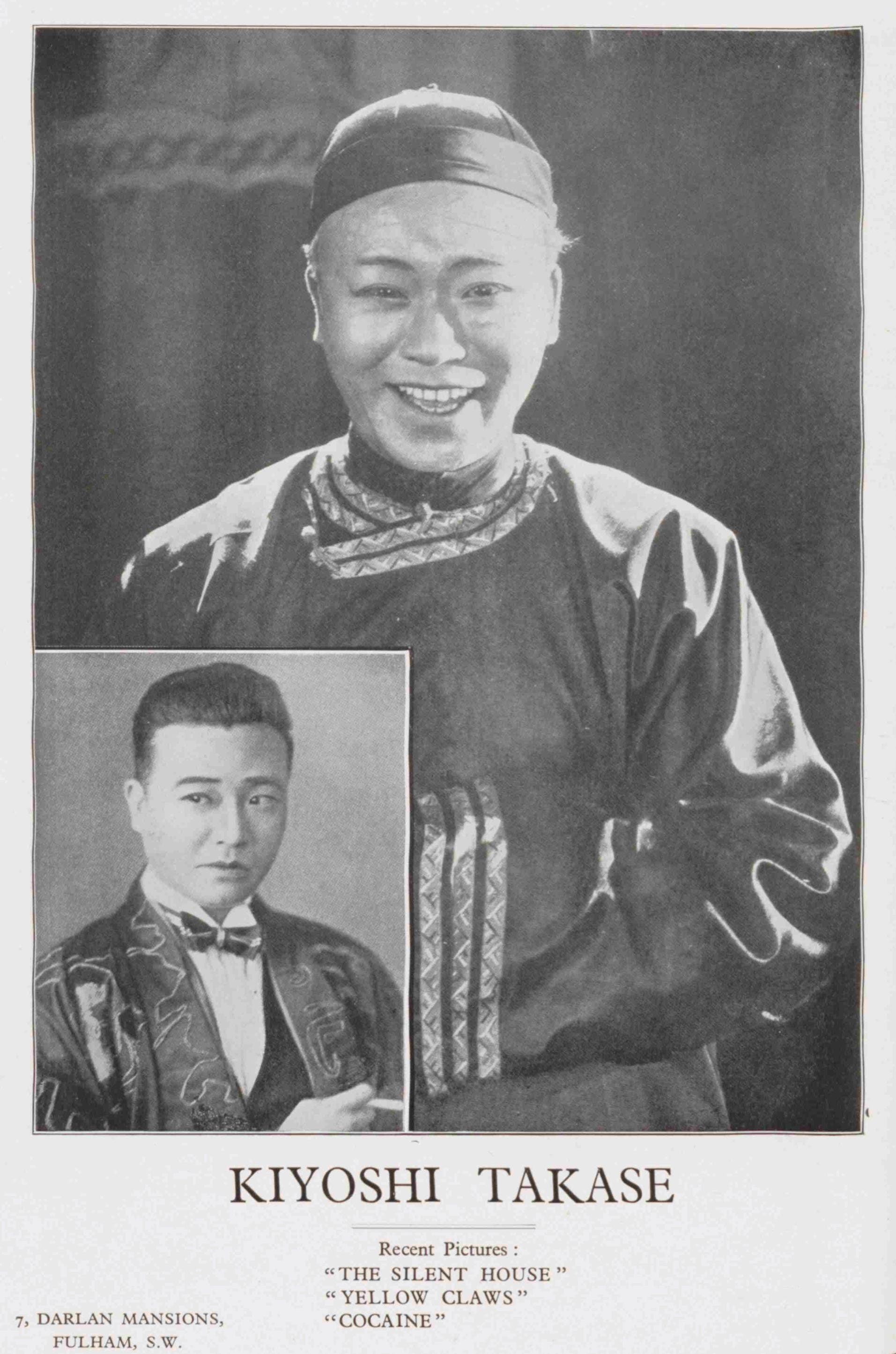
The only other credited East Asian actor in Chu-Chin-Chow was the fascinating Kiyoshi Takase, who worked regularly with the film’s director, Walter Forde, most prominently in the highly underrated silent thriller Red Pearls (1930). Like Ley and Lai Foun, Takase came to British cinema via a sideways route, arriving from Japan as a stage magician—a background that his watery performance in Chu-Chin-Chow makes painstakingly obvious. His film career had spanned the final decade of the silent era before he made the successful transition into talkies, and he was almost certainly the first actor of colour with a speaking role in a British feature, High Treason (1929)—a film that was subsequently banned in New York as a piece of anti-war propaganda so dangerous that it ran the risk of fomenting pacifist riots!
It’s worth noting that several Black actors also appear across AMW’s British films, perhaps none more memorably than the Jamaican-born Lucius Blake, probably the most prolific Black actor in early British cinema. It’s been several decades since the historian Stephen Bourne (who also curated the BFI’s previous AMW season in 1995) first identified Blake as the top-hatted dancer thrown out for dancing with Ellen Pollock in Piccadilly, and yet no one except the BFI seems to have ever credited him as such. Eagle-eyed viewers might also have spotted him four years later, in a brief appearance as one of the men playing dice in an alley in Tiger Bay. The prominent Guyanese actor Robert Adams made his film debut in Chu-Chin-Chow, as one of the pot-stirrers in the film’s opening number; previously a teacher and professional wrestler (although not at the same time), he would go on to a distinguished acting career lasting until his final film appearance in 1960.
And, of course, there’s also the disabled actor Ben Soutten, who plays one of Olaf’s menacing gang members in Tiger Bay…but I could go on about this stuff all day, so I’d better stop while I’m ahead!
You can follow Marc David Jacobs on Twitter and read his work on the BFI website.
Pssst…
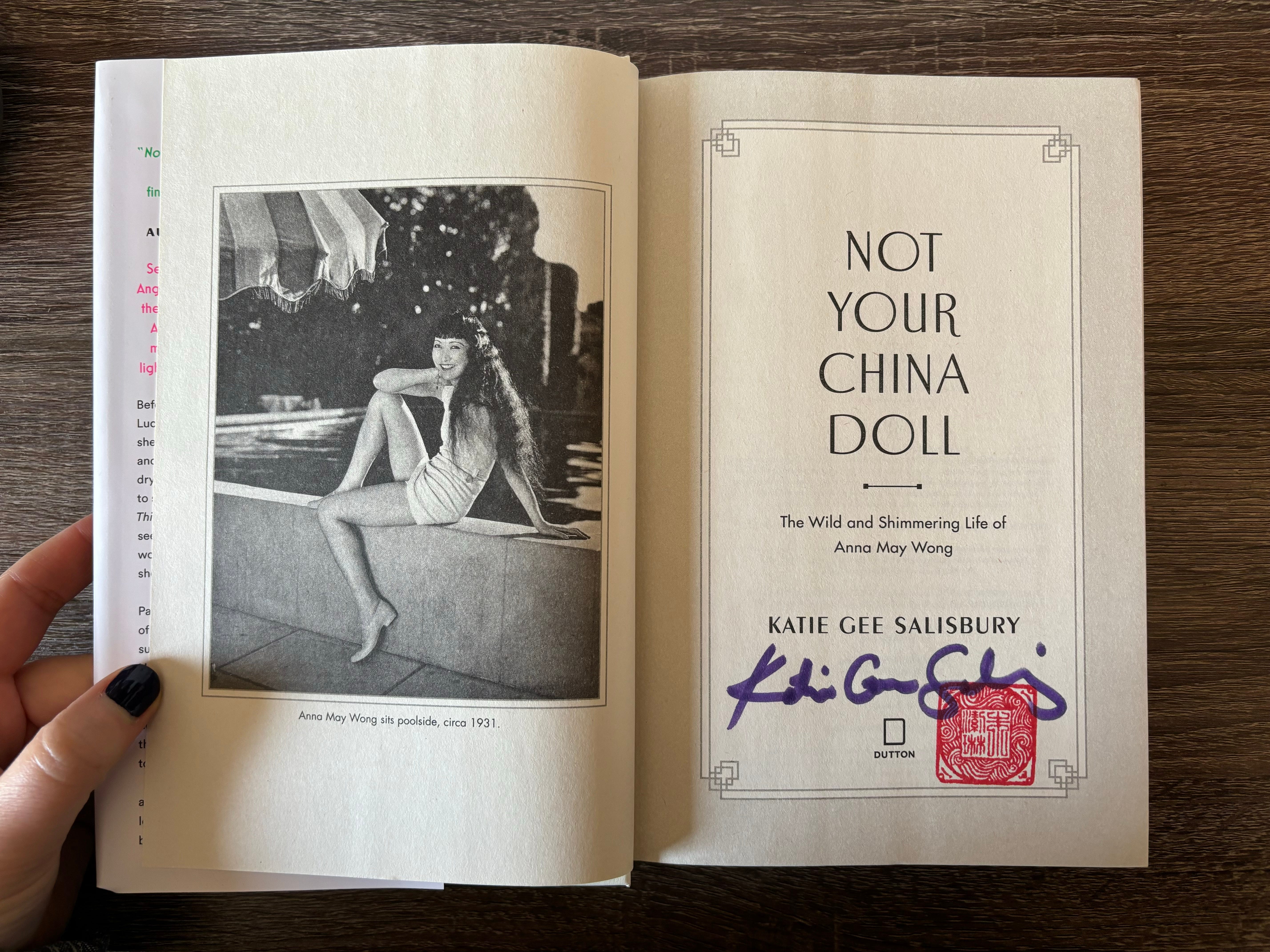
If you still haven’t gotten a copy of Not Your China Doll, this may be your chance. I have a limited number of books that can be signed and shipped directly to you or your loved ones. Place your order here by December 18 and the book will ship before Christmas.
Gordon Wong Wellesley is a distant relation (his mother Florence Ratley was the sister of my 2 x great grandmother). She was a white South African of British heritage. She had an affair with his father, later returning to her husband before divorcing years later.
Wonderful to read and so glad that you and Marc David Jacobs got to connect - and it's inspiring to learn that he became an accomplished film scholar by immersing himself in the subject. It's interesting to read about the cultural contrasts, in particular that the suicides of AMW's characters and other male actors in her British films actually followed a broader British cinematic trope/pattern of characters selflessly sacrificing their lives, happiness, reputation for others in those years following WWI. Reminds me of learning how "honor," chivalry, and gentleman's warfare influenced Britain's participation in The Great War.