

In the midst of the pandemic in the spring of 2022, I traveled to the UK for a weeklong research trip. I arrived at the British Film Institute in London with the goal of watching the obscure films Anna May Wong made in Europe in the late 1920s and early 1930s—films I had read a lot about but never laid eyes on. Stating the obvious, it’s difficult to write about, let alone grasp the beauty of, a film you’ve never watched.
At the time, a short, tantalizing fragment of the last 15 minutes of Song (1928) had been posted to YouTube by a dedicated fan but that was the sole remnant available online. The only other way to watch Song or Pavement Butterfly (1929) was by traveling to one of the European archives that hold original prints. When I stepped into the basement viewing room at BFI with 35 mm film canisters stacked and waiting for me, I knew how special the experience would be. I would be one of the very few people to ever watch these films, nearly 100 years after their release.
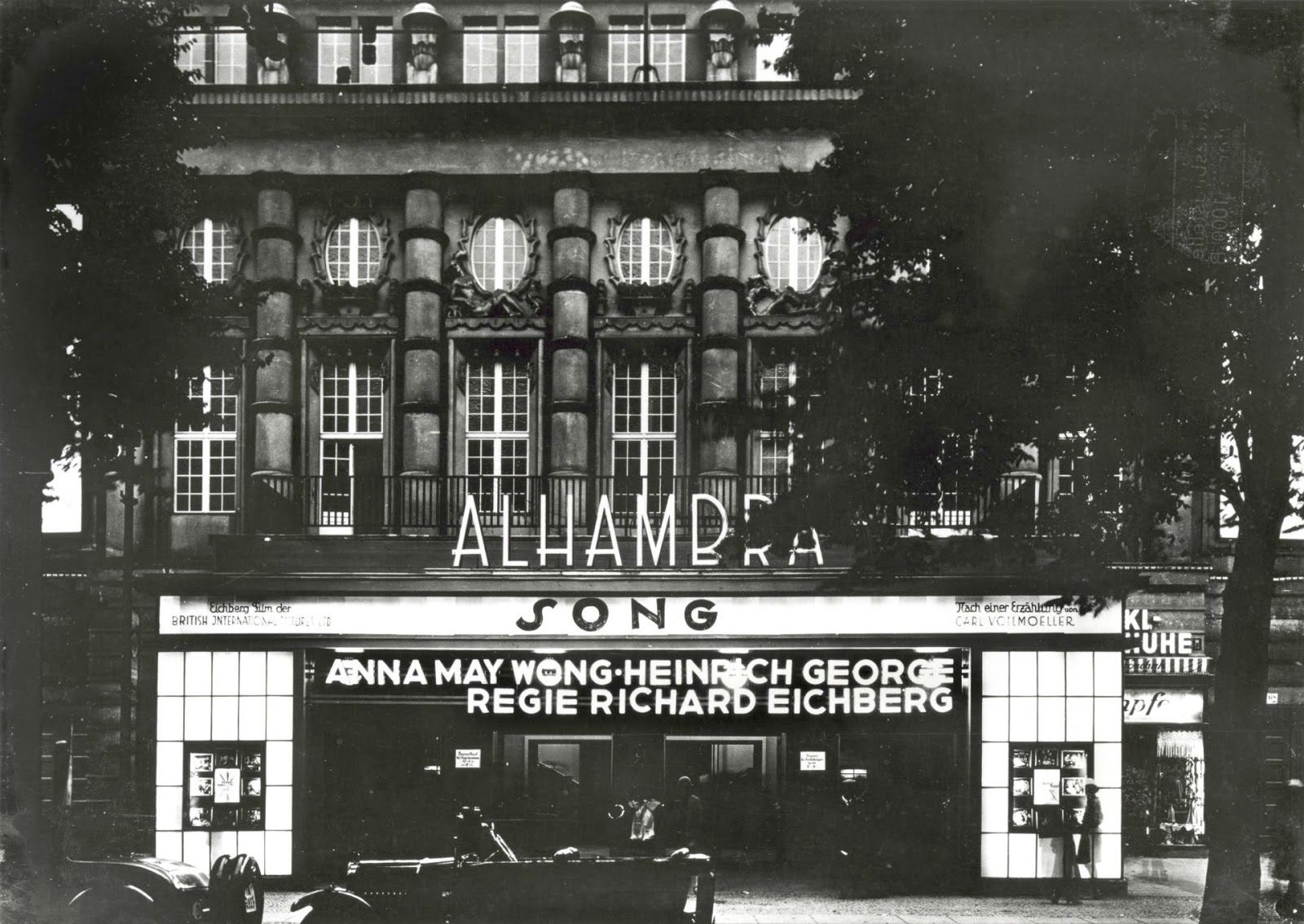
My first screening was Song, and perhaps that’s why I’ve been partial to it ever since. For 90 minutes, I watched in awe as the celluloid flashed before my eyes, pausing only to swap in the next reel. Leaving the screening room that night I felt as if I was floating on air. It was that rare cinematic experience that leaves you breathless, when the thing you’ve witnessed somehow rearranges the atomic matter inside of you and the entire cosmos. Anna May Wong’s powers as an actress were on full display in this starring vehicle. And it’s something she was only able to do because she had the gumption to leave Hollywood.
My next thought was, how can we make this film available to others? People need to see AMW in one of her finest performances! What a travesty to think that all these years the print had been collecting dust, hidden away in the BFI vault.
Luckily, things move quickly in the twenty-first-century. Little did I know that efforts were already underway at the Deutsches Filminstitut & Filmmuseum and Filmmuseum Düsseldorf to restore and digitize Pavement Butterfly and Song respectively. With the publication of Not Your China Doll in 2024, I soon learned that BFI also had plans to utilize its archive and launch an entire season of Anna May Wong films in the coming years. Thus, after many months of planning, I’m delighted to announce that AMW’s day in the sun is finally here!

Anna May Wong: The Art of Reinvention, a season of films representing four decades of her career, opens today at BFI Southbank in London and runs through October 6, including two screenings of each film in the program. I’m excited to share that I’ll be attending several of the screenings, introducing a few of the films, and participating in events with other experts, including Anna Wong and film critic Pamela Hutchinson.
Pulling this festival together was an enormous undertaking and we have Dr. Xin Peng, Assistant Professor in Film and Screen Studies at the University of Cambridge, to thank for it. (As well as the entire team at BFI who have worked nimbly behind the scenes.) Her tireless efforts and thoughtful curation has brought together a dazzling showcase of Anna May Wong’s oeuvre. I first connected with Xin, who has published essays on AMW in relation to Asian racialization and new media technologies, over email when she was researching cinematographer James Wong Howe. Of course, anyone who’s into the stories of Asian Americans in early Hollywood is a kindred spirit in my book. And I’m eagerly awaiting the book-length media history that she is currently working on about San Francisco’s Chinatown telephone exchange (c. 1894-1949) and its operators.
As you can imagine, I was overjoyed to learn that Xin would be programming BFI’s Anna May Wong season. She and I recently talked about her interest in AMW, the season’s lineup of films, and all the work that went into making it happen.
When did you first learn about Anna May Wong? What originally drew you to her?
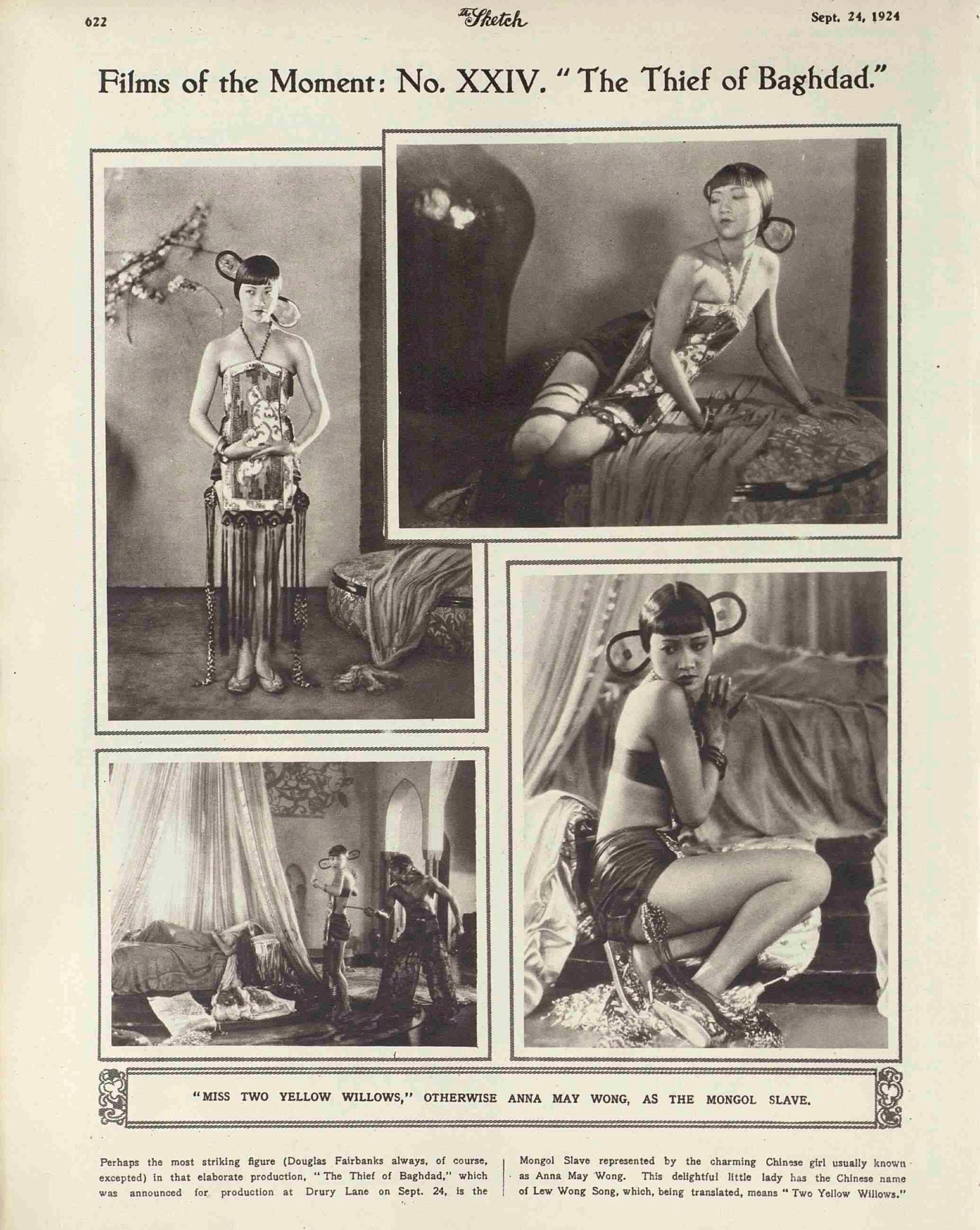
I was a master student at the University of Chicago, taking a course on the history of silent cinema. And it was at the screening of The Thief of Bagdad that I first saw Anna May Wong. I didn’t expect to see someone like her—a strikingly glamorous Chinese woman—in a silent Hollywood blockbuster starring the embodiment of virile American masculinity, Douglas Fairbanks. But there she was, a scantily clad Mongolian slave whose eyes shot through the screen and stole the entire show. I was immediately hooked by her magnetic presence, but didn’t know how to make sense of it. The impression stayed with me. And it was after I started my PhD study at the University of Washington in Seattle that I began to learn more about and systematically study Hollywood Orientalism and the history of Chinese and Asian America. I learned that stars and actors like Anna May Wong served (and still serve) important ideological functions in the cultural industry, but whose careers were almost predetermined to be episodic, frustrated, and controversial. What drew me to her is how much one can learn about American history, transnational media culture, and the relationship between race and technology through the life and career of this one figure. Even her “worst” films (and I would say especially her worst films) can tell us much about a world that was irresistibly attracted to her presence but refused to truly understand and honor her.
How has Anna May Wong factored into your scholarly work as Assistant Professor of Film and Screen Studies at Cambridge University?
It was really by looking at Anna May Wong’s films and career that I started to figure out what I am truly interested in as a film and media scholar. I watched Daughter of the Dragon and The Toll of the Sea during the first year of my PhD study, among many other orientalist productions of that period. And something just clicked for me. There is so much to be discovered and said about the relationship between race and media technologies.
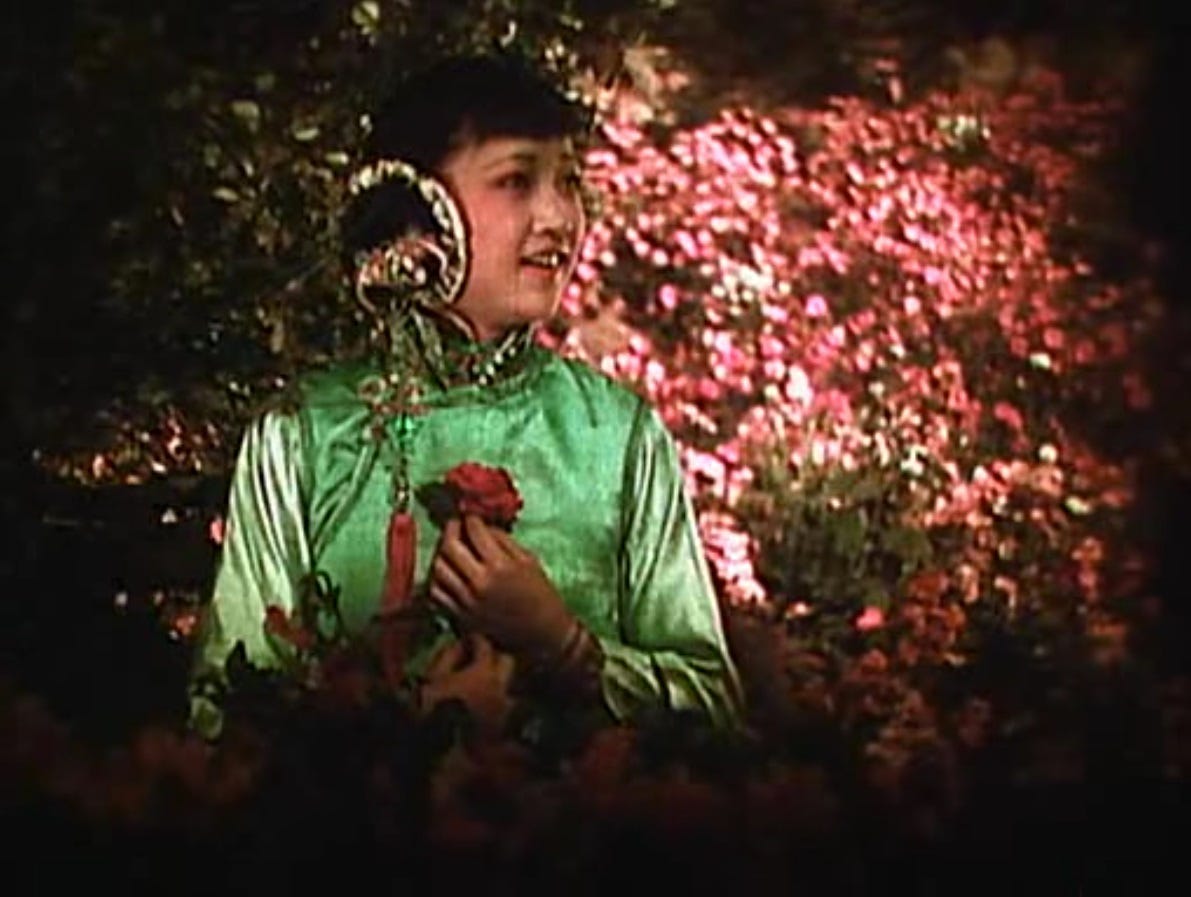
For example, Technicolor did not set their early test feature film in an imaginary China for no reason. And it was clear even for the press at the time that the so-called “flowery kingdom” served to naturalize the not-so-natural two-color film process (Technicolor II), which could only reproduce part of the spectrum. And in order to prioritize “pleasing” white flesh tone to be “sufficiently red-orange,” the two-color process was engineered to emphasize the complementary colors of red and green. The setting in China justifies the exploitation of those striking color palettes: think verdant green leaves clashing with the red flowers, or Lotus Flower’s extravagant red-and-green wedding gown. Lotus Flower is especially aptly-named because she is rendered a body ornament in this orientalist landscape, without the agency like that afforded to the white American wife, whose monochromatic dress clearly sets her apart from the lush landscape. The white Americans are figures against the ground and (colonist) subjects exploring the three-dimensional space.
Anna May Wong’s remarkable navigation of the transition to sound cinema, especially in European multiple-language co-productions, is another example. And Paramount exploited that to ride the wave of the early sound horror cycle initiated by Universal Studios with landmark films like Frankenstein and Dracula. In my teaching I always try to offer more complicated—less teleological and deterministic—ways of thinking about media technologies and film history. And Anna May Wong’s works have served as great examples for that purpose.
Putting together a monthlong festival dedicated to the films of Anna May Wong seems like quite the undertaking! What was the process of programming the season like? In addition to the prints held at BFI, did you travel to other archives to watch AMW’s films?
My first thought after receiving the invitation from the BFI was I need to get in touch with people who’ve written books on Anna May Wong to get their views on what the season should be like. I had the good fortune to have already known you and Yiman Wang from my previous work, and both of you have been most generous in sharing your ideas, reading and commenting on drafts and proofs, and agreeing to travel to London to speak at the season.
It was incredible to have the luxury to program such a generous number of films from Anna May Wong’s long and diverse career. I tried to program some double bills so that we can have an even more comprehensive coverage of her oeuvre. The real difficulty was writing the season introduction and summaries of films within the very tight word limits and to fit with the BFI style and tone. It was certainly not a mode of writing that I am used to as an academic! I spent most of the time watching and re-watching films, reading and rereading materials to figure out highlights of each film to present in the guide. Apart from that was the reality of millions of emails and dozens of online meetings. Discussions about contextual events, guest speakers, community screening, marketing and press, etc. Myriads of details and logistics. I can’t imagine the amount of work the amazing BFI teams undertook in the background to make all these happen. The work is really not glamorous but that’s what it takes to get those glamorous pictures (and people!) to the audience.
I did go to UCLA (as part of an archival trip for another project) to watch Anna May Wong’s documentary of her 1936 trip to China. I programmed it to be screened with Shanghai Express because that film was completely constructed in Hollywood as an orientalist fantasy but used James Wong Howe’s location footage shot during his 1929 trip to China as rear projection to authenticate the setting. I thought it’d be an evocative pair of films for thinking about different modes of filmmaking, collaborations between Chinese American filmmakers, and representations of cultures and lands. Anna May Wong’s documentary is now only preserved as this 1958 TV episode in which she narrates to a white audience the so-called lost paradise of a pre-Communist China. That she acts as a guide with authority but was in fact herself a stranger to the titular “native land” presents intriguing questions about representation and mediation as well. Unfortunately, the BFI was not able to secure a copy from the UCLA archive for the season.
It’s such a shame BFI won’t be able to screen AMW’s China film. I recall watching it in one of the screening rooms at the UCLA Film and Television Archive several years ago and it really touched me. I hope one day it can be restored and digitized so that more people can see it. For all those who would love a peek at the footage, UCLA has put some of the outtakes on YouTube.
Earlier this year, you and I talked about some of the themes apparent in AMW’s filmography, which is long and varied. I mentioned that Anna May was a master of reinvention; in fact, I believe it’s one of the main reasons she was able to work nearly every decade of her life. You and BFI ultimately landed on the title “The Art of Reinvention” for the season. What does that phrase mean to you in the context of AMW’s life and career?
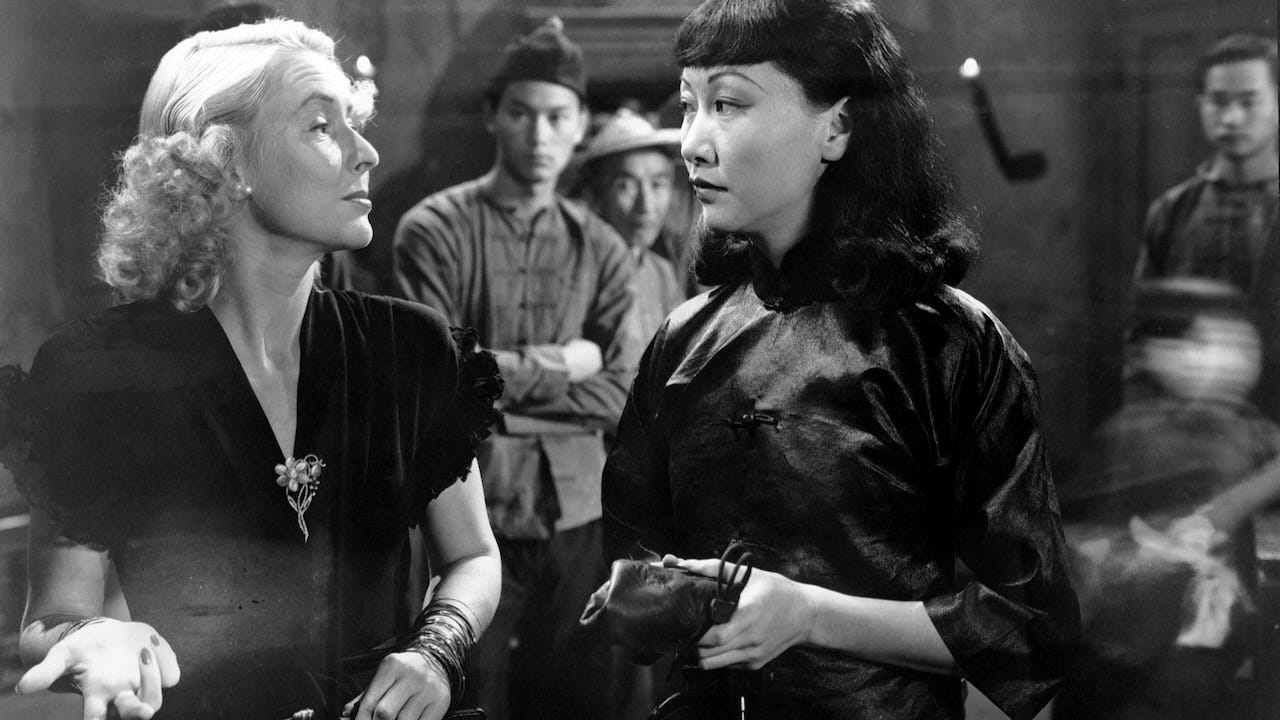
I owed the title to you, Katie! It was really a great suggestion and I love how it captures the ups and downs of her career. It is important to note that she was forced to reinvent herself many times throughout the years—she couldn’t afford to simply repeat and enjoy what she achieved or retire in luxury. Often she had to make the most out of very little. It was a true revelation for me to watch, for the purpose of curating this season, her latest films, in which she played the house maid in rich, white households. Those are very small roles, but she played them with dignity and gravitas, so much so that her presence shifts the entire mood, and we know that her role, the maid, holds the key to the secret and narrative solution. I think she was only able to achieve this because she had transitioned so many times before. She traveled to Europe because she was restricted to stereotypical bit roles in Hollywood. She acquired a British accent and learned to speak German and French for the transition to talkies. She played patriotic roles during WWII in Poverty Row productions after her first and only trip to China, during which she was attacked by the press and the crowd at some points. She performed in vaudeville and legitimate theaters, and ventured into television as opportunities in the film industry dried out. The Art of Reinvention captures both the adversities she encountered as a Chinese American actor and her resourcefulness and resilience at different historical junctures.
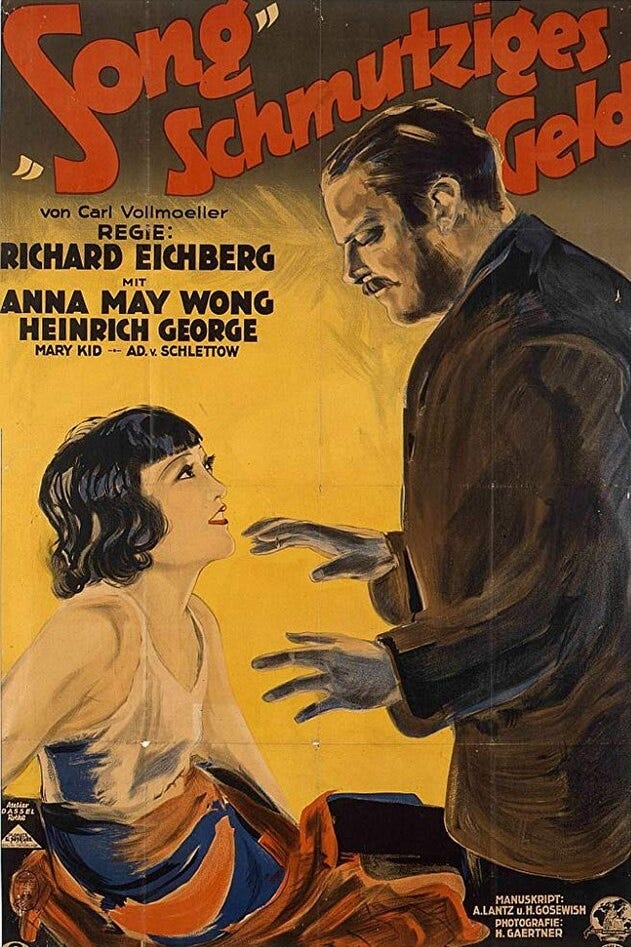
I’m especially excited to watch the Filmmuseum Düsseldorf’s restored version of Song, which I have long felt to be AMW’s best film. I can’t wait to see what the musical accompanist comes up with. (For those new to silent films, most silents don’t have original musical scores; instead, local piano players or sometimes small orchestras used to improvise compositions to enhance a film’s emotive qualities.) What are some season highlights moviegoers can look forward to?
It is wonderful that we are going to have so many Anna May Wong experts speak and in conversation with each other at a series of contextual events! The season intro is definitely one of the highlights, and I so much look forward to introducing the many facets of Wong’s life and career to the audience with you, Anna Wong, and film historian Pamela Hutchinson. The q&a featuring you and Anna after the screening of a new restoration of Song is of course another highlight. I am also very excited about my discussion after the screening of Java Head (a rare opportunity to see on the big screen) with film historian Marc David Jacobs, who has done remarkably detailed research on the history of Chinese and East Asian figures in British cinema both as represented onscreen and working within the industry (the latter including Gordon Wellesley, who worked on the screenplay for Java Head). Professor Yiman Wang is giving a key scholar lecture, which draws on research from her new book, To be an Actress: Labor and Performance in Anna May Wong’s Cross-Media World (presented in partnership with the Department of Film Studies, King’s College London, and Cambridge Film and Screen). We also have film historian Dr Kirsty Sinclair Dootson, who is the expert in color media, and artist filmmaker Michelle Williams Gamaker, who retells The Thief of Bagdad with her film, Thieves, to join us in giving introductions to different screenings.
For me, it is always a real treat to see silent films on the big screen with live accompaniment, especially with new restorations of many of Wong’s European silent films. In the spirit of reinvention though, I want to highlight the distinct features of each individual film, from different periods of her life and career, even though many of them feature her in similar roles with similar tragic fate, or are simply films either with low production value or potboiler plots. On the one hand, she’s most glorious in some of the more cliche roles, and those are also the films that are more aesthetically interesting and accomplished. On the other hand, she was able to play more agential and positive characters in low-budget, even Poverty Row productions. I want to highlight her collaborations with other Asian American actors and filmmakers, such as Sessue Hayakawa, Philip Ahn, and cinematographer James Wong Howe. And I am very glad that the BFI went with our suggestion to conclude the season with Flower Drum Song, so we can celebrate Anna May Wong’s important legacy in this (not unproblematic) euphoric musical with a majority Asian-American cast, even though she did not live to star in it.
Anna May Wong: The Art of Reinvention opens at the British Film Institute on September 1 and runs through October 6. View the full program here and book your tickets through BFI’s website. To read more about Dr. Xin Peng's research on Anna May Wong, check out her papers “Colour-as-Hue and Colour-as-Race: Early Technicolor, Ornamentalism and The Toll of the Sea (1922)” and “Anna May Wong and Sessue Hayakawa: Racial Performance, Ornamentalism, and Yellow Voices in Daughter of the Dragon (1931).”
📚 Paperback Giveaway!
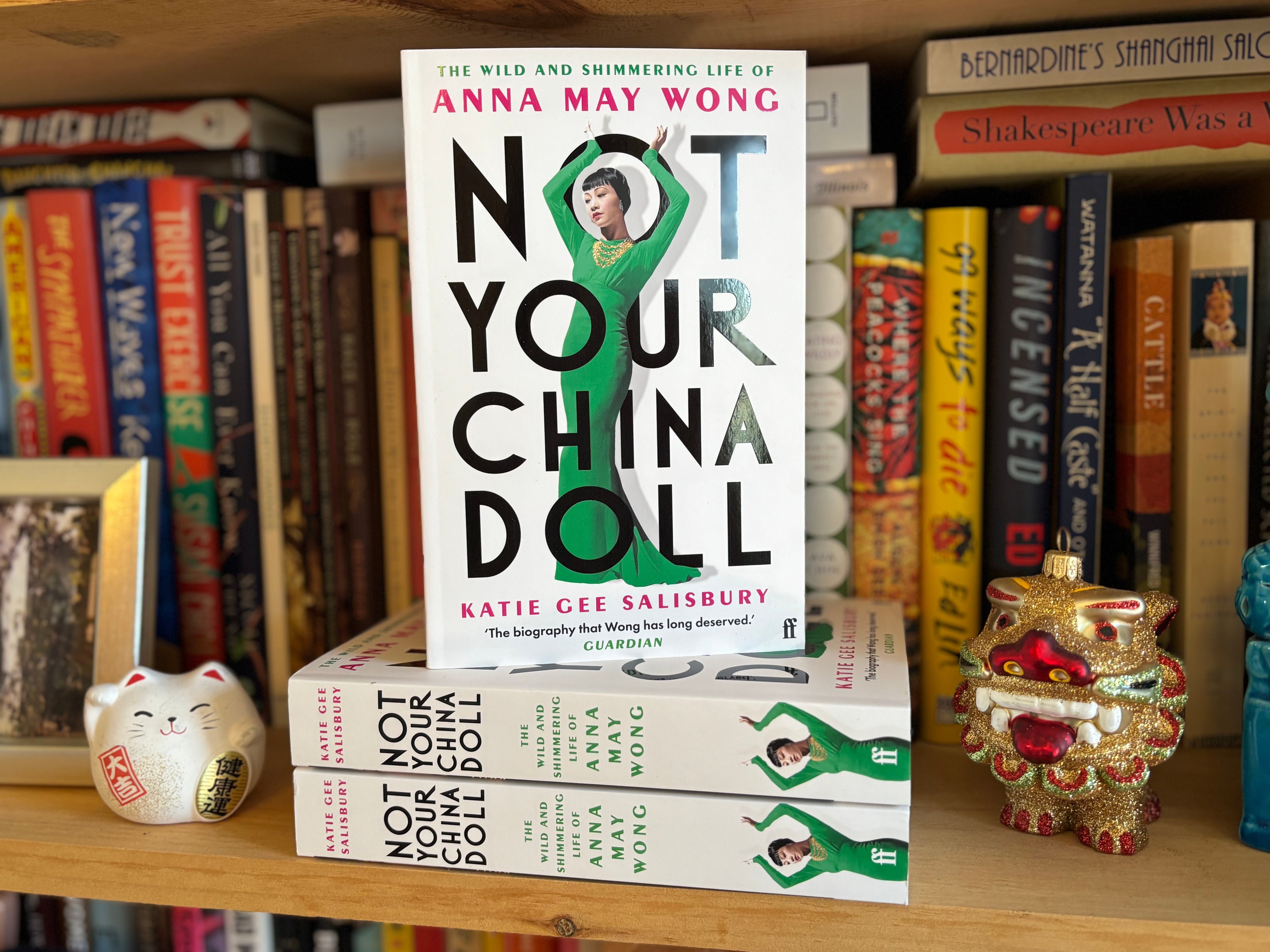
Faber has just published the paperback edition of Not Your China Doll in the UK (which includes all of my reprint corrections that set the record straight on issues like whether Mary Wong appeared in The Good Earth, etc.). To celebrate the paperback and BFI’s Anna May Wong season, I’m giving away two copies! To enter the drawing, you must be a Half-Caste Woman subscriber (if you’re not already, subscribe here) and leave a comment on the post below by midnight Friday, September 5, 2025. The winners will be contacted via email. Good luck!
Upcoming Events
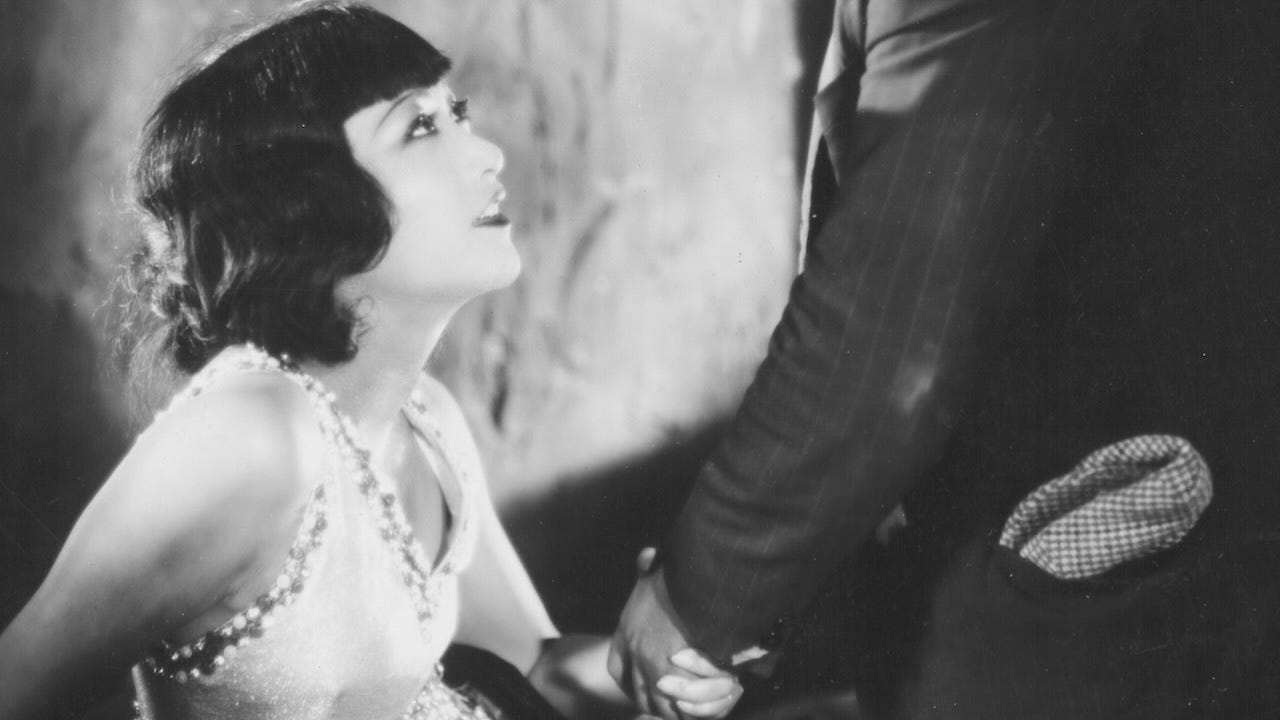
September 7, 2:50 pm - Screening of Song at BFI + Q&A with Anna Wong
BFI Southbank, London, UK
Buy tickets
September 8, 6:10 pm - Introduction to Anna May Wong’s Reinventions at BFI, a panel discussion with Anna Wong, Xin Peng, and Pamela Hutchinson
BFI Southbank, London, UK
Buy tickets
September 8, 8:30 pm - Screening of Shanghai Express at BFI
BFI Southbank, London, UK
Buy tickets
September 9, 8:25 pm - Screening of Daughter of Shanghai & King of Chinatown at BFI
BFI Southbank, London, UK
Buy tickets
September 12, 7 pm - Screening of Piccadilly at The Nickel
London, UK
Buy tickets
September 24, 6:30 pm - Two Dragons in Hollywood: Bruce Lee, Anna May Wong, and the Past and Future of Asian American Representation with Jeff Chang
Center for Brooklyn History, Brooklyn, NY
Register
My interest in Anna May Wong's life and career is rather recent but I have read a couple biographies and by far Not Your China Doll is the best ... best researched and best written. Katie Gee Salisbury is a fantastic biographer. Knowledgeable and insightful.
Look forward to reading the book. Are you planning on doing any book signings?