

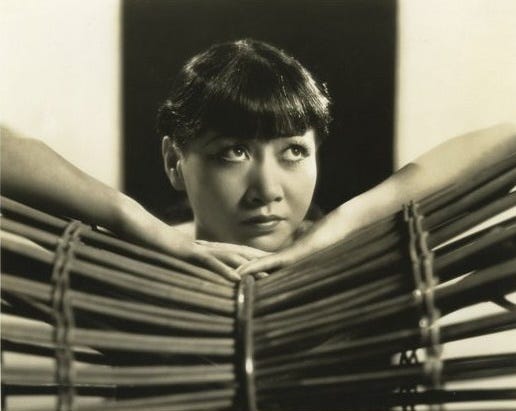
It’s been a while since you’ve heard from me. I’ve been to Maine and Maui and back, while at the same time trying to make progress on a massive new reading list and write the first pages of my next book. That’s all to say, I’ve been busy! I hope you’ll forgive me for this terribly late recap of everything you wanted to know (and didn’t want to know) about my trip to London for BFI’s Anna May Wong season. I thought it would be fun to channel the gossip columnists of AMW’s era, like Louella Parsons and Hedda Hopper, and decided to draw upon O. O. McIntyre’s classic “New York Day by Day” column (btw, he was also a friend of AMW’s). Here goes!
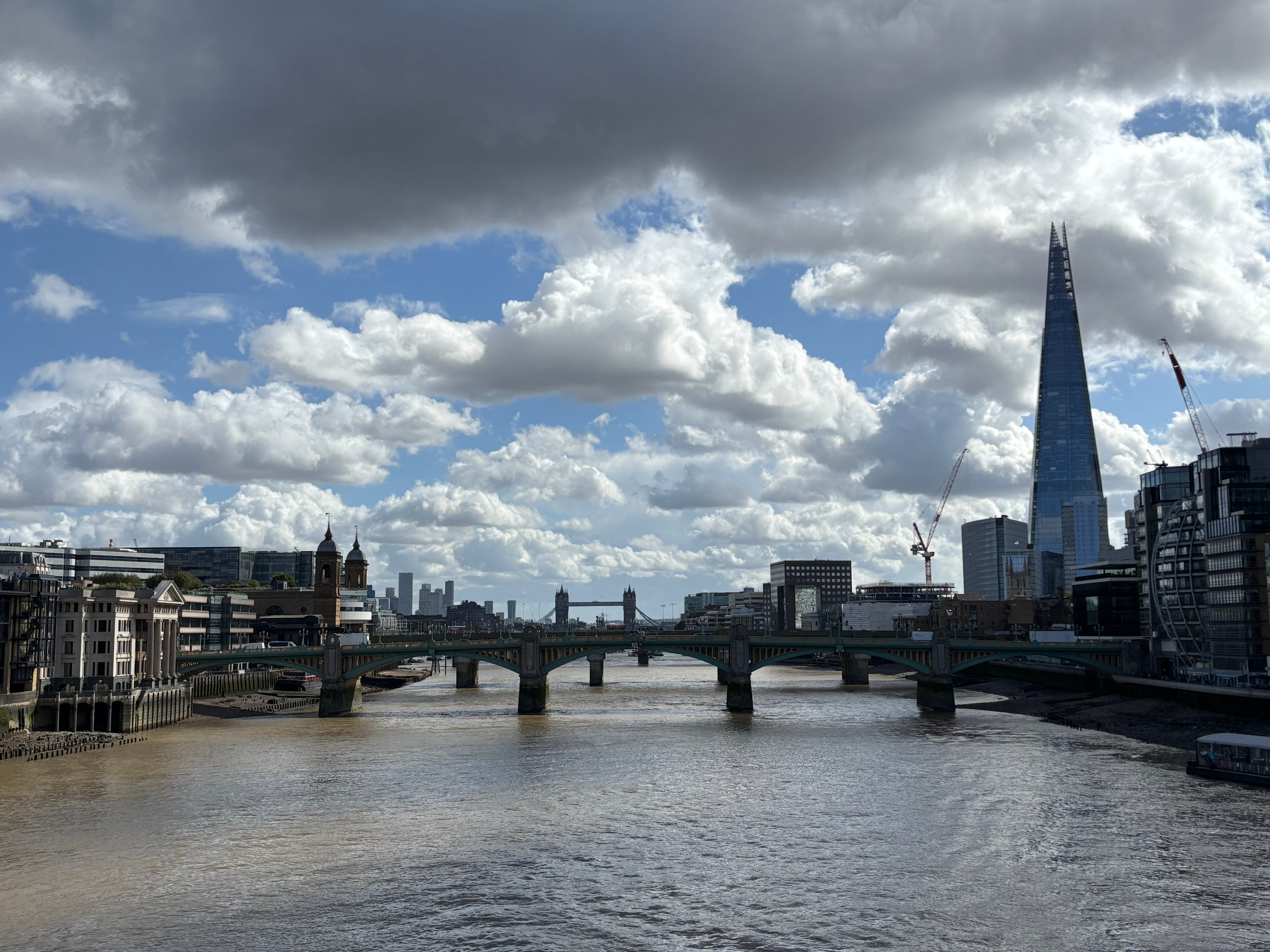
LONDON—Modern air travel (when it works) is something of a marvel. No sooner had we bid New York adieu and lowered our seat backs for bedtime than we made touch down at Heathrow, bright and early Saturday morning. We arrived in that city known for its medieval towers, crumpets and tea, and barristers’ powdered wigs quite bleary eyed but excited nonetheless. Someone had had the bright idea of taking the redeye to London to maximize our time in the city (it was me, regrettably), but my husband, Nick, gamely made the best of it. Fighting our heavy-lidded jetlag, we made a pact to stay awake the entire day. Or at least until sunset. Several coffees were consumed in quick succession.
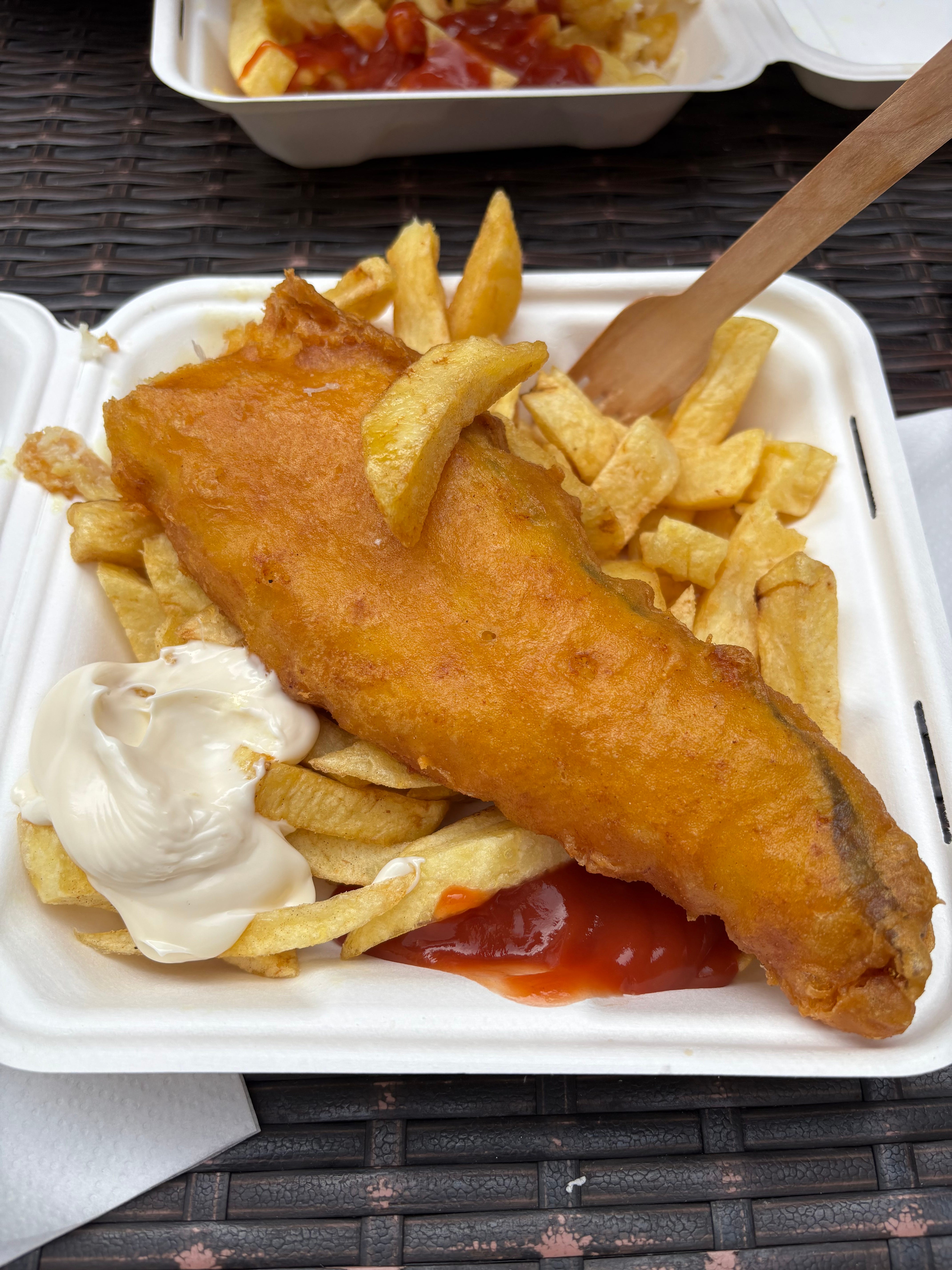
Our first stop was Gigs in Fitzrovia, which some locals consider the best fish and chips shop in London. The golden battered cod, fried to a delectable crisp and enjoyed with a splash of malt vinegar, did not disappoint. From there, we ambled down Tottenham Court Road in the direction of the River Thames. Along the way, we passed through the stalls of Covent Garden, where Anna May Wong once strolled on the arm of composer Constant Lambert, one of her hopeless admirers. The pair would have been on their way to the opening of Puccini’s Turandot at the Royal Opera, where AMW surely made a commotion wearing a “brocade mandarin coat in vermilion and gold, paired with a matching pink brocade dress.”
Our Covent Garden crossing was blessed with more sunshine than is usually forecasted for early September and, lingering in its warmth, we paused a few moments to watch a local street entertainer convince several grown men to don tutus and dance for the crowd in the square. Not quite Royal Ballet material.
We stayed up late enough to greet Anna Wong, recently arrived from a 10-hour flight from Los Angeles, and share a pint at the Duke of Sussex pub in Waterloo. Our table, along with the rest of the pub’s Saturday night crowd, seemed to buzz with excitement for the next day’s events: the opening of Anna May Wong: The Art of Reinvention, the BFI’s season of AMW films.


The BFI Southbank location, where their public screenings take place, is part of a series of brutalist buildings surrounding the Waterloo Bridge. Navigating the maze of concrete blocks, Anna, Nick and I found our way to the entrance where Aga Baranowska was awaiting our arrival. Aga is one of BFI’s programmers and the woman largely responsible for pulling together all the logistics of the season. She brought us to the green room where we munched on sandwiches and chatted with BFI silent film curator Bryony Dixon.
Just as we were preparing for the screening of The Toll of the Sea, Andreas Thein burst in the door to join our party. He’d been misdirected to the Green Room, a restaurant across the street from BFI, instead of the actual green room inside the Southbank complex. Clever names sometimes outwit themselves. Andreas, head of collections and restoration at Filmmuseum Düsseldorf in Germany, is the archivist responsible for restoring Song—what I consider to be Anna May Wong’s best film.
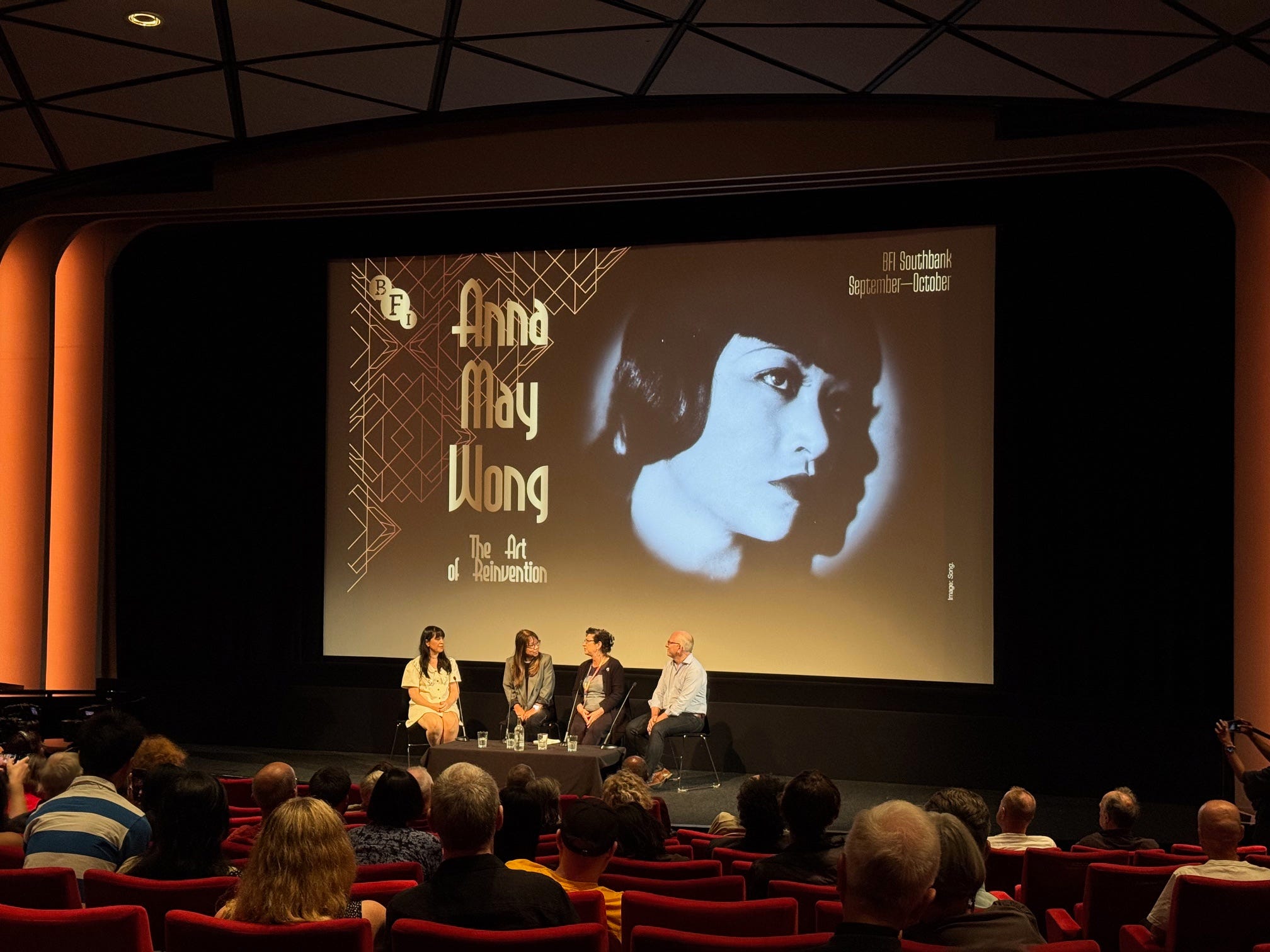
Following the screening of Song, which was accompanied live by the brilliant musician Stephen Horne and his devastating original score, Anna, Andreas, and I made our way to the stage for a conversation moderated by Bryony. The audience piped up with a number of their own questions, including an interesting commentary from an older woman who recalled her father’s love of silent films; she rattled off a rhyme he used to sing about Anna May Wong, King Kong, and a few other Ongs. Audience members eventually skittered off to catch the last train of the night. The one week we decided to come to London also happened to be the week Tube workers decided to go on strike!
Luckily, the BFI Southbank really has its social entertainments figured out. For those disposed to hanging out, the lobby houses a bar and a coffee shop. Meanwhile, a restaurant with riverside views at the other end of the complex offers the perfect setting for dinner dates. What hip, young cinephile wouldn’t want to be seen here? Following our triumphant first day of screenings, we sipped a quick cocktail at the bar with Bryony and Andreas, then dashed into a cab for our dinner reservation at The Ivy in the West End.


The door man at the Ivy wears a top hat, which should tell you everything you need to know about the establishment. Anna May Wong was spotted dining there during her West End run in the somewhat disastrous play The Circle of Chalk, long before the restaurant became a well-known celebrity haunt for the likes of Madonna, Oasis, and Tom Cruise. We took some cheeky pleasure in the fact that our three course meal was part of a menu inspired by Downton Abbey. The shepherd’s pie and sticky toffee pudding, both signature Ivy dishes, were well worth the gluttony of exceeding the daily recommended calories. On the way home, I dragged our party past one more AMW landmark: the New Theatre (known today as the Noël Coward Theatre), where the Chinese American actress made her stage debut.
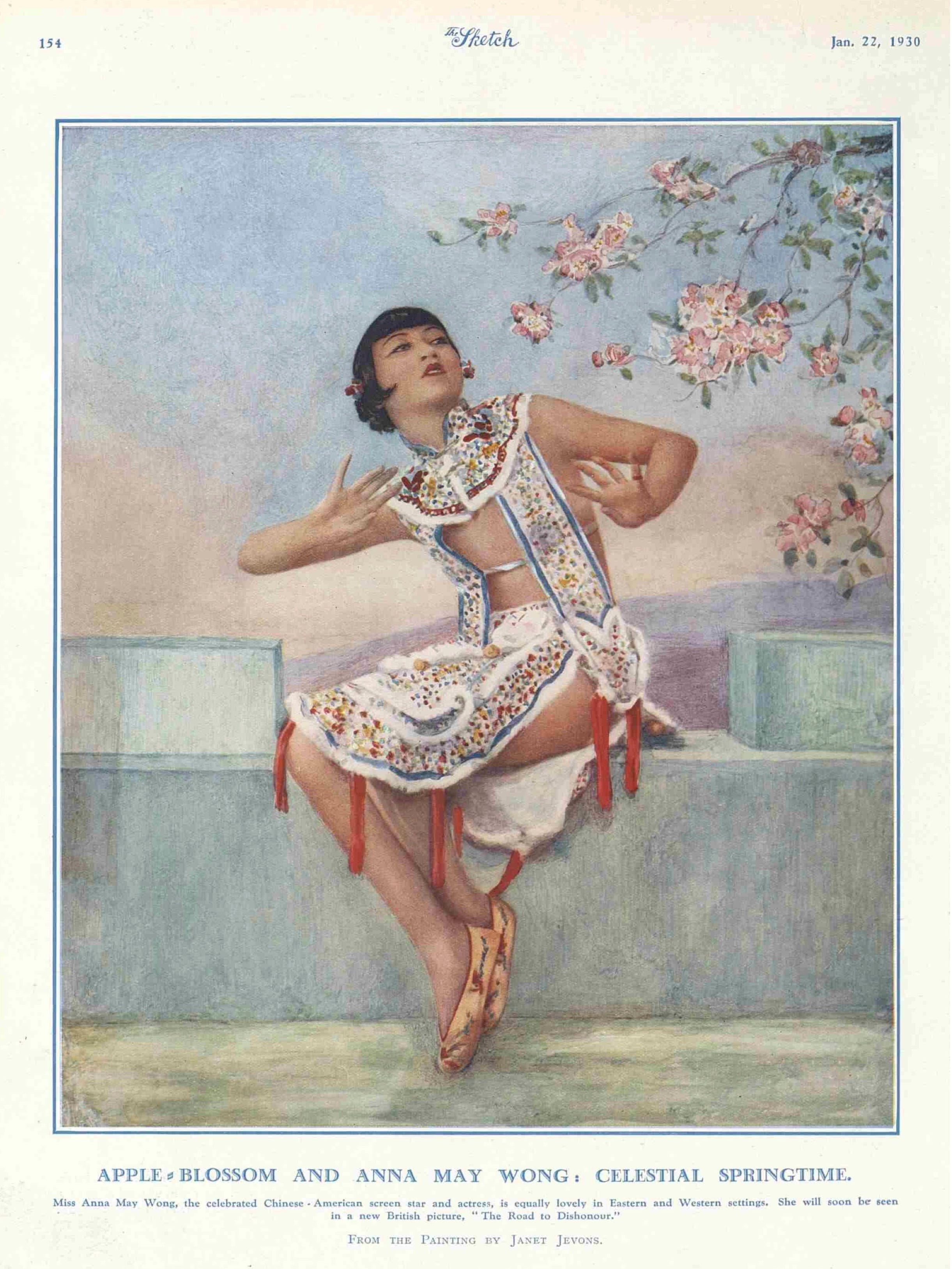
The next day Anna and I braved the overcrowded double decker buses (a consequence of the Tube strike) to Oxford Circus. From there we made our way deeper into Mayfair, that tony neighborhood just east of Hyde Park where Anna May rented rooms during her London residency. Without even meaning to, we found ourselves standing at the threshold of Claridge’s, one of London’s most storied and glamorous hotels. We recreated our own version of the photograph Anna May once took with friends Paul Robeson and Mei Lanfang outside and then slipped through the revolving glass door for a quick peak inside.
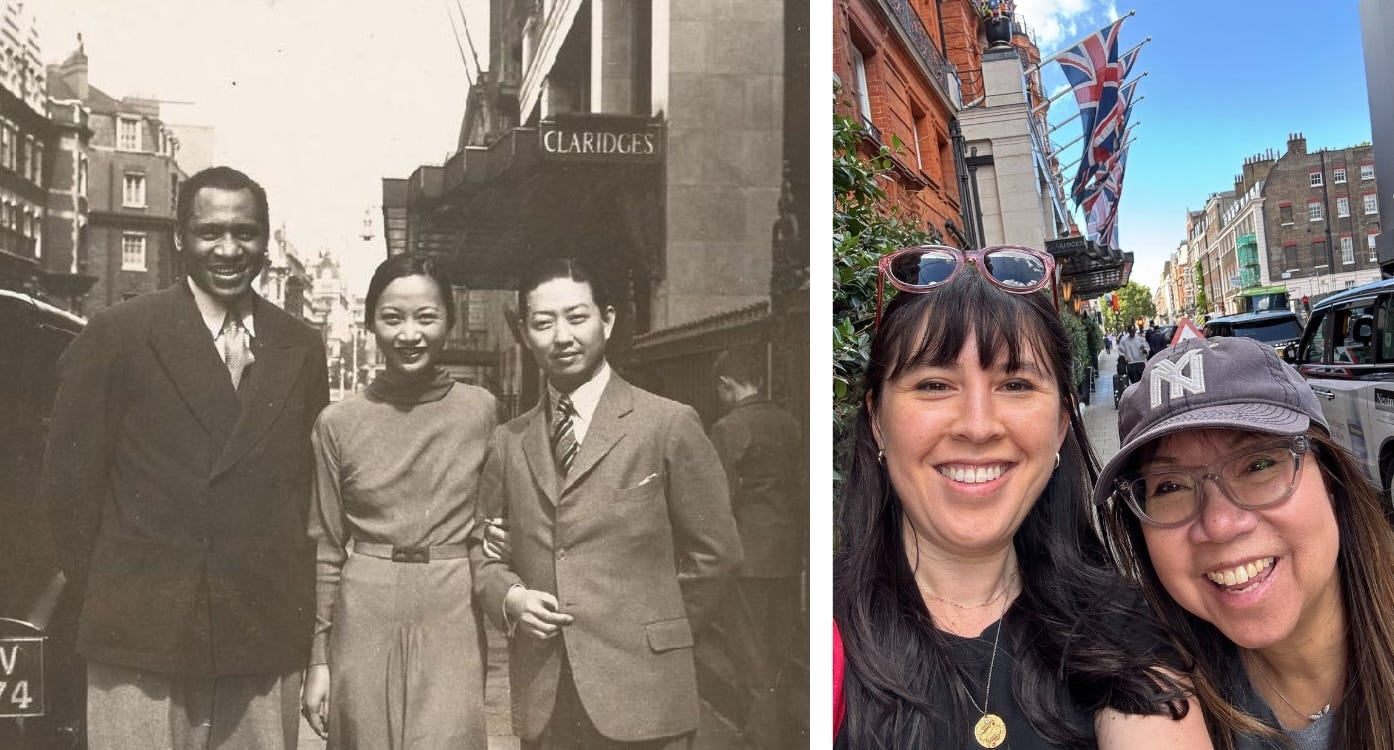
Later, as we strolled down Park Lane staring up at the mansions and townhouses, Anna and I wondered aloud which of the windows above would have been hers. Anna May likely would have had a direct view of the park, where she often took horse riding lessons in her Chinese finery.
That evening Anna and I went back to the BFI to participate in a creatively designed panel discussion with Xin Peng, Cambridge professor and curator of the BFI’s AMW season, and Pamela Hutchinson, the well-known British film critic who I previously had the pleasure of chatting with on a BBC Radio program. Each of us had chosen two film clips from AMW’s oeuvre and were given an opportunity to explain our interest in the specific scene while the other panelists also contributed their thoughts. I chose a tender scene from Song between Anna May and her character’s love interest, played by Heinrich George, as well as AMW’s slapsticky sketch from Elstree Calling. It was quite a fun exercise and an efficient way to run through AMW’s diverse and extensive filmography, especially for audience members less familiar with her works.
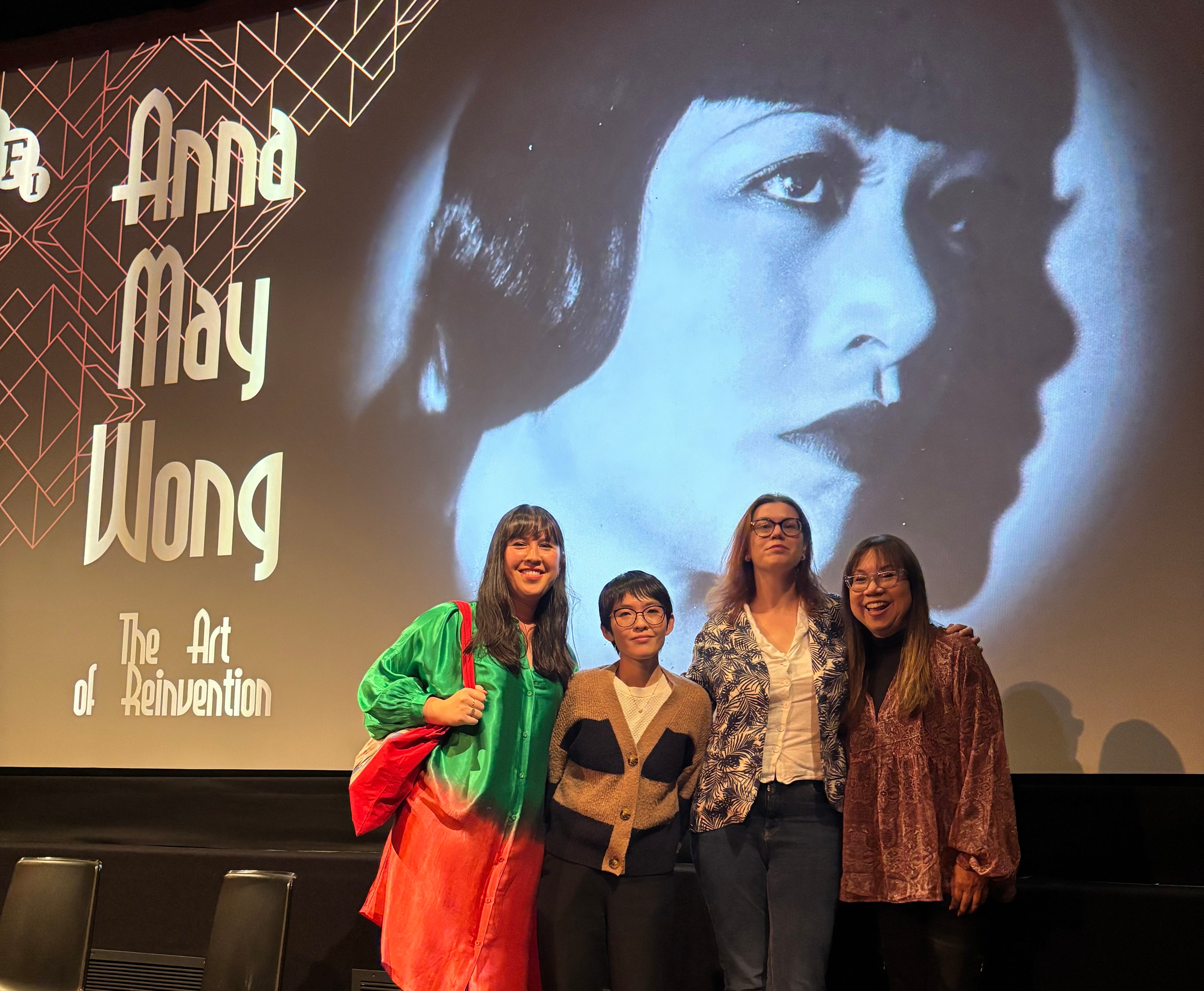
At the conclusion of the panel, I zipped back out to the lobby where there was already a line formed for my book signing. BFI’s AMW season coincided with the paperback release of Not Your China Doll in the UK, so I was all too happy to oblige book buyers and Anna May Wong fans alike. In fact, they cleaned out the BFI gift shop and we sold out of books in a matter of minutes!
As soon as the last book had been signed and a handful of #StarringAnnaMayWong postcards sent home with a diehard fan, I ran back to the theater where Shanghai Express was about to be screened and introduced the film. I’ve seen this film so many times, its smart dialogue is burned into my brain. It was easy enough to drill off some interesting facts, make my point about the Marlene/Anna May rivalry, and set the night’s main feature into motion. Then it was back to the BFI bar and lounge to hobnob with some of London’s brightest film folks and scholars.
The animated crew included Xin Peng and her partner, who had made the trek in from Cambridge. The filmmaker Michelle Gamaker, whose fantastical films featuring Anna May Wong and Sabu had caught my interest several years back. And Marc David Jacobs, a self-professed film nerd and mixed Asian like me, who wowed me with his research on AMW’s British films such as Java Head, Elstree Calling, and Chu Chin Chow (stay tuned for a more detailed exploration of this topic in an upcoming Q&A). Aga, our faithful BFI ambassador, made sure the drinks kept flowing, and for the first time on our trip I think Nick was relieved not to have to sit through another AMW film.
As the theater began to empty out, bestselling author Paul French came by to say hello. Paul has a wealth of knowledge about goings on in China during the 1930s and beyond; over email, we corresponded about our shared interest in Frank Dorn and what other scholars get wrong about him. He very kindly gave me a copy of his book, Destination Shanghai, which includes a section on Anna May Wong and Warner Oland’s visit to China. But he demurred when I asked him to autograph the book for me! I suppose that’s just British modesty.


On Tuesday, Nick and I were off to The Bindery in Hatton Garden to meet with my editor at Faber, Hannah Knowles. Having grown up professionally in the book publishing business in New York, the thrill of being a published author somehow loses its luster when I’m at home. Maybe it’s knowing too much about how the sausage gets made. But there was something undeniably sexy about getting to walk in the door to my UK publisher. Like Alice through the looking glass.
Hannah, who is a longtime AMW fan, has been an exceptional champion for the book on this side of the Atlantic. She took us on a quick tour of the office and The Bindery’s well-groomed rooftop garden (which has pop tunes pumped in via hidden speakers at all hours of the day) and even let me take home a copy of Sally Rooney’s Beautiful World, Where Are You. (The book nerd in me loves getting British editions of books.) Then we went for lunch at a nearby Thai restaurant where the dishes marked spicy were actually spicy.
Now, whenever you put any number of publishing wonks in the same room together, they inevitably get down to talking about “the state of publishing” and why no one reads anymore. Our lunch was no different—Nick completed the circle as a book editor at Simon & Schuster—but at least there was a feeling of solidarity in our shared commiseration.
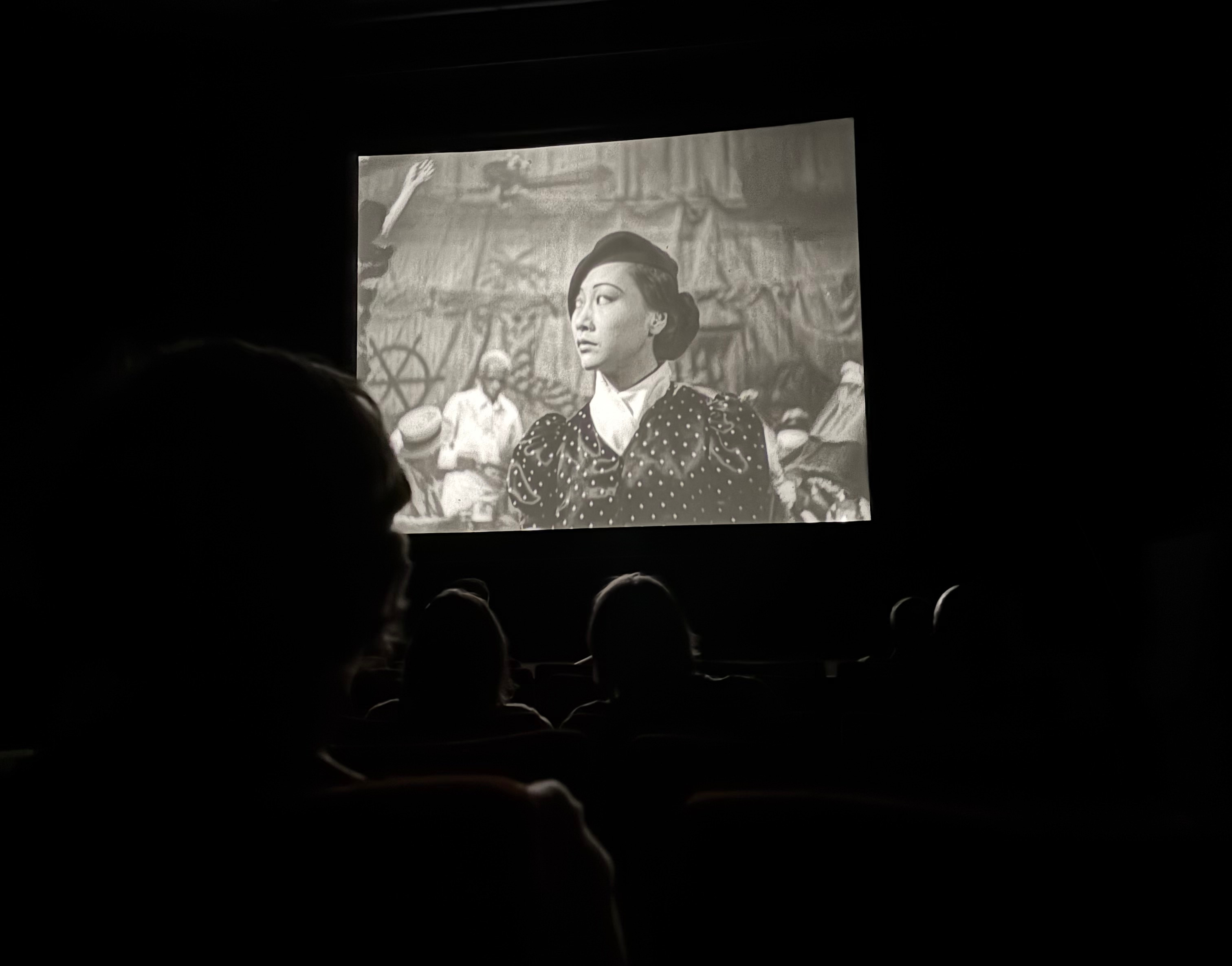
Later that day, Anna and I returned to the BFI for our final evening of screenings. First up was the restored version of Pavement Butterfly, followed by a double billing of Daughter of Shanghai and King of Chinatown. A few lifelong cinephiles, who delighted in these rarely screened B movies, chatted us up in the lobby afterwards. One said he planned on watching every film in the season, which quite impressed us. The other gentleman, Sebastian Wheen, handed me a card for his cinema archive and pressed me to get to the bottom of the copyright issue that had prevented AMW’s China documentary from being screened at the festival. Consider it a work in progress.
With our time in the limelight at an end, we rounded out the rest of the week with sightseeing and coffee meetings. The wonderful thing about England, or really any country outside of the U.S., is its incredibly efficient train system. Anna, Nick, and I hopped on a train headed southwest to Kent where we had plans to visit Knole House, a fifteenth-century estate with royal ties. AMW once stayed there by invitation of friend Eddy Sackville-West.


The people who work at Knole, one of many historic sites managed by the National Trust, very graciously welcomed us and let us wander the grounds. They even made sure to flip Eddy’s guestbook to the page where AMW signed her name in May 1929 so that we could marvel at it in his gatehouse apartment.
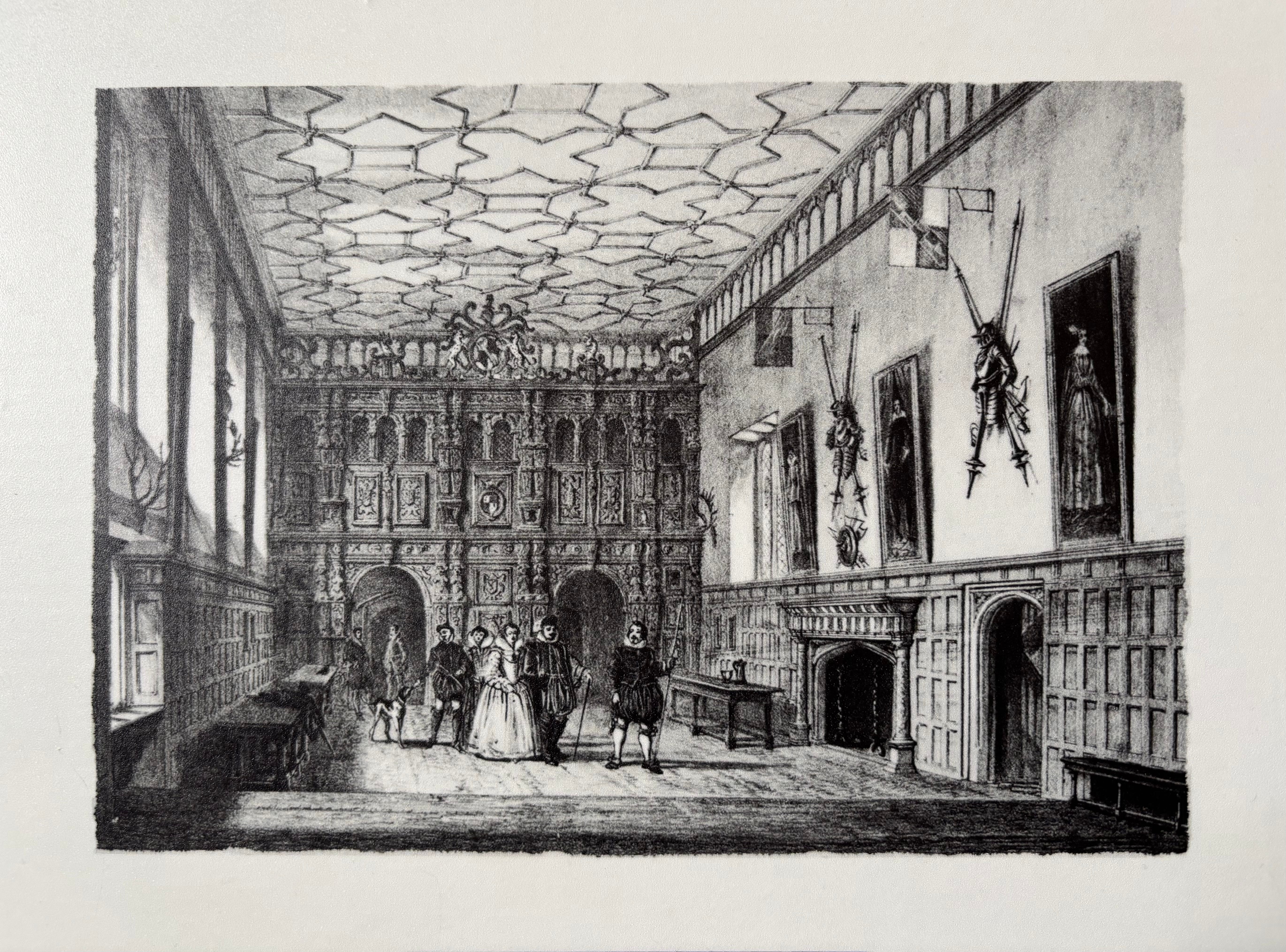
We wound our way through the ornate yet creaky halls of Knole House trying to imagine the impromptu Chinese feast Anna May hosted there for her new British friends.
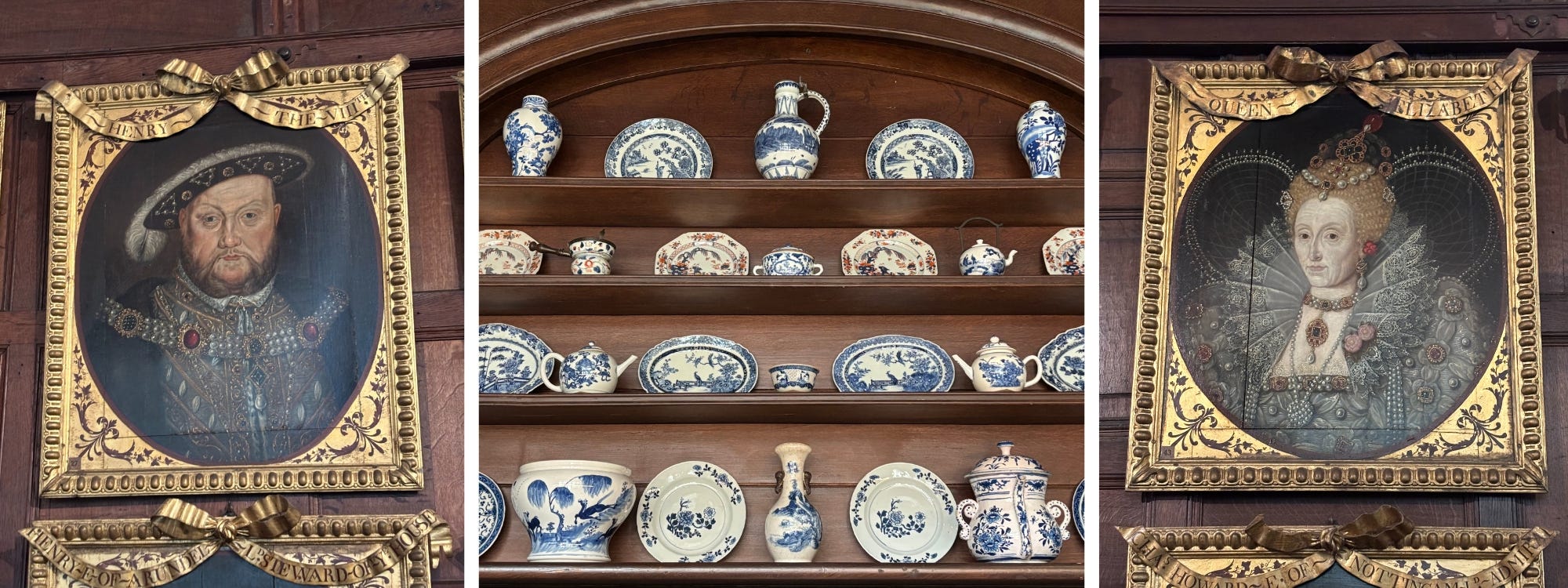
The hall of portraits was especially memorable. Nothing says “I have friends in high places” like paintings of Henry VII and Queen Elizabeth I casually hung in your sitting room. As we were about to end our tour, one final portrait caught my eye. Anna and I gazed up at it and then at each other right on cue. The painting was dated to 1776 and featured a Chinese man clutching a fan and wearing slippers, a red plumed hat, and what looked like a queue trailing down his neck. The gold placard beneath read simply: Wang-Y-Tong.
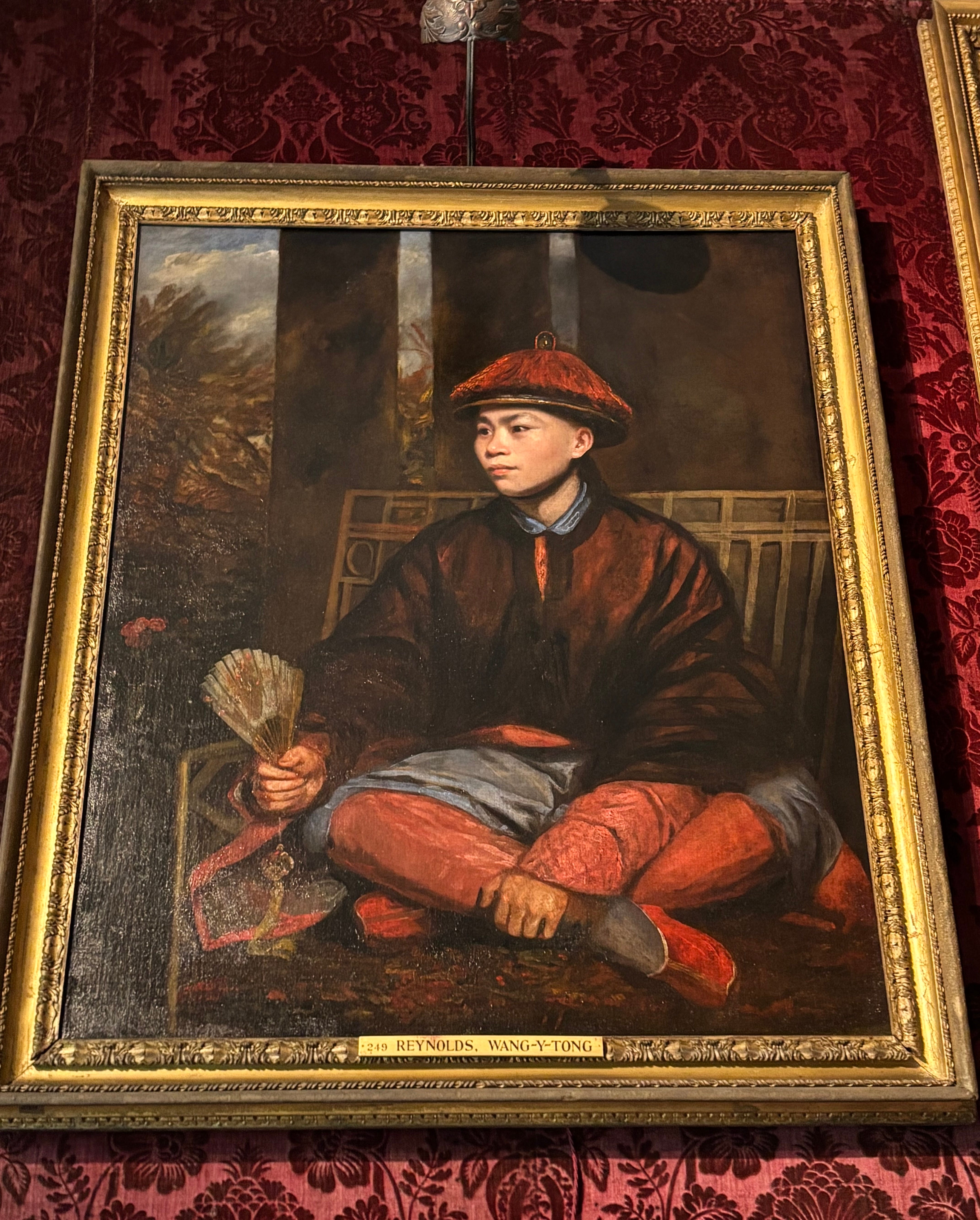
We were startled. Who was this mysterious Chinese man who predated Anna May Wong’s own arrival at Knole?! A guidebook to the room’s paintings explained that Wang-y-Tong, as they called him, was from Guangzhou, China, and came to England with an official of the East India Company who was friends with the Sackville family. Wang-y-Tong apparently became a page boy at Knole and attended the local Sevenoaks School. He proved valuable for his knowledge of Chinese horticulture and advised Josiah Wedgwood on the production of Chinese porcelain, a commodity all the rage in Europe at the time.
Our day trip to Kent ended with lunch at the cozy White Hart pub in Sevenoaks. While it rained outside, we refueled with tomato soup and steak and potato pie, then hopped on the train back to London. Thursday I took Nick on a whirlwind tour of Oxford and my old haunts from when I studied abroad there, but I’ll save you the details.
By Friday, the sunshine had gone and the London fog felt like it might roll in at any moment. I spent the day making a few last minute calls. First to Basement Steve, the keeper of the keys to the BFI’s film archive at their offices in Stephen Street. He was one of the reasons my archival visit there in 2022 to watch Song, Pavement Butterfly, and AMW’s other British films was so special. We caught up over a cup of tea and digestives, as one does when in London.
Then I was off to Bloomsbury Square where I met with the prolific author Jordan Goodman. We had the loveliest conversation about a book idea that has yet to come to fruition but currently occupies a large part of his imagination. It follows the many threads that lead to and from Limehouse Blues, and of course there’s a major role for AMW to play, but I won’t say much more than that. And when I mentioned my visit to Knole, Jordan knew exactly who the mysterious Wang-y-Tong was and explained why I likely hadn’t seen the painting on my first visit to Knole in 2022—it would have been on loan to another institution then. The next day he sent me two papers he’s written on Wang-y-Tong, which are admittedly still sitting in my reading queue as I type these words.


How else to end a trip to London celebrating the wild and shimmering life of Anna May Wong than with a screening of Piccadilly, perhaps her best known British film. The Nickel, a new independent cinema, rather enthusiastically agreed to host me for a little film talk and screening thanks to my editor Hannah. I broke out my silk pajama suit and red lipstick for the occasion. There wasn’t an empty seat in the house. Best of all, my college friend, Ahmed, now a fashionable Londoner by all rights, came to watch me in action.
Afterwards Nick, Ahmed, and I descended into the Rabbit’s Hole, one of London’s underground bars inside a former public toilet. It may sound gross but it was anything but. Think dark academia with a touch of gold filigree, plenty of rabbit tchotchkes, and a menu filled with classic cocktails. I downed at least one bee’s knees in honor of Anna May Wong and I’ll leave it at that. When morning came, it was Saturday once again and time to board our flight back to New York City. London, you charmed us. I can see why Anna May loved you so. Here’s hoping it won’t be too long before we meet again!
So glad you had a good trip to London - and what a triumph the Anna May Wong at the BFI season was!! Seeing Shanghai Express on the big screen at NFT1 was amazing.
Great read about a great trip!
Your comment about modern travel reminds me of something I’ve thought about.
Anna May sure did travel a lot! Whether it was around Los Angeles, Europe or Asia she always seemed to be on the move.
Even by today’s standards, she traveled frequently.
But for a woman of her upbringing/background to do this 100 years ago absolutely amazes me.
She was at the same time, of her time AND ahead of her time.
Anna had an inner drive that was remarkable.
Truly wish we could have been in London for this event.