

I don’t know if other creative people are like this, but before I’ve finished the project that’s currently in front of me, I often have the idea for the next one waiting on standby. I always seem to have too many ideas and never enough time to execute them. Many of them live in an imaginary file cabinet, burning a hole in my brain for years (like Not Your China Doll did), while others die a slow, silent death, losing the flicker that sparked them in the first place.
The thing about books—as anyone who has ever attempted to write one will tell you—is that writing them is really hard and takes a long time, too. George Orwell offered this keen observation in his essay “Why I Write”:
All writers are vain, selfish, and lazy, and at the very bottom of their motives there lies a mystery. Writing a book is a horrible, exhausting struggle, like a long bout of some painful illness. One would never undertake such a thing if one were not driven on by some demon whom one can neither resist or understand. For all one knows that demon is simply the same instinct that makes a baby squall for attention. And yet it is also true that one can write nothing readable unless one constantly struggles to efface one’s own personality. Good prose is like a windowpane. I cannot say with certainty which of my motives are the strongest, but I know which of them deserve to be followed.
Orwell captures so much of what I’ve felt about the writing process. At the heart of every project is a mystery, a question I feel compelled to explore and that can only be answered through the act of writing itself. When you decide to embark on writing a book, that “horrible, exhausting struggle,” you must choose a topic that you’re genuinely interested in excavating, all the way to its molten core. You’re going to be stuck thinking and writing and speaking about it for the next 5-10 years, so you better like it!
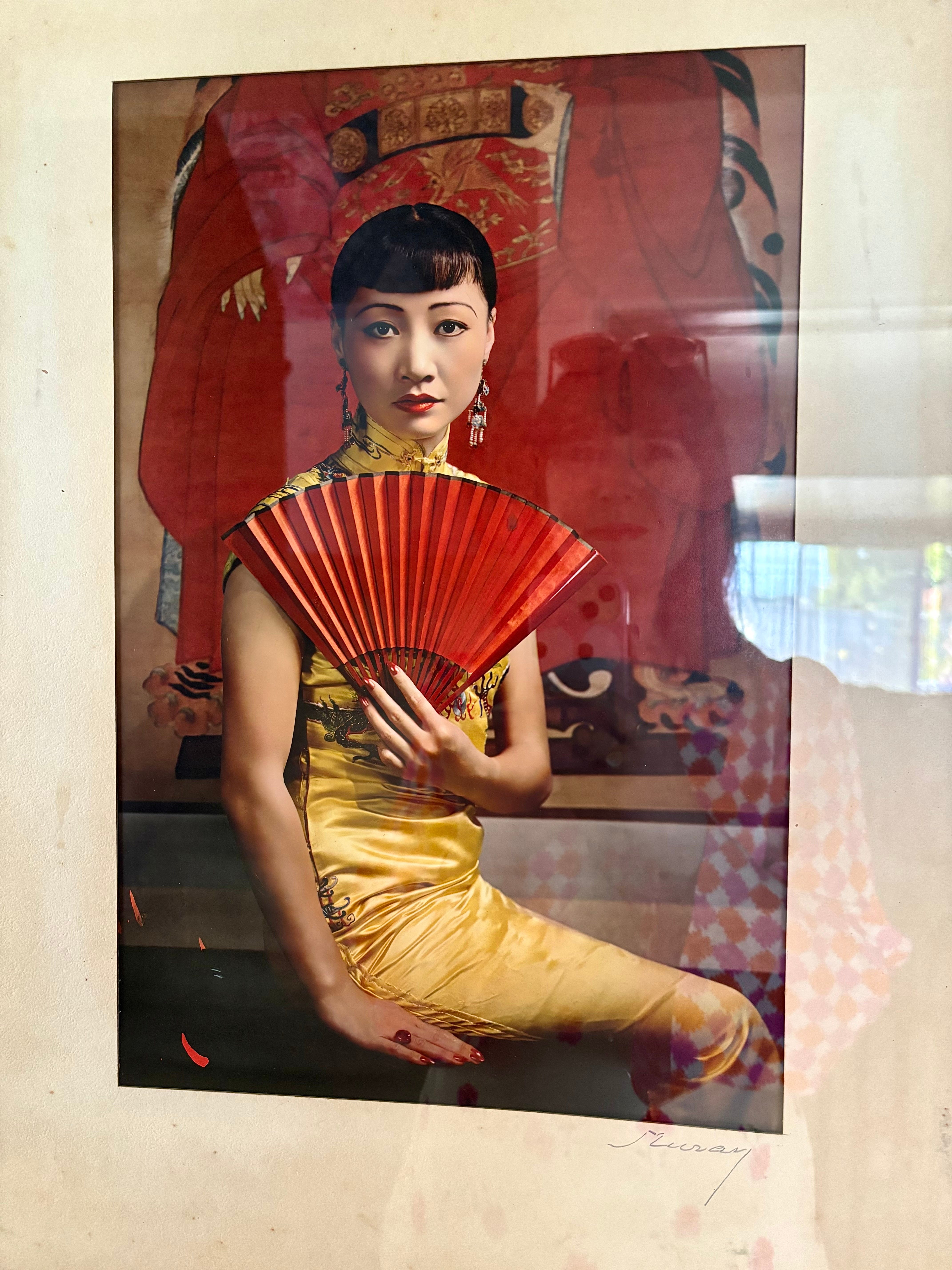
Anna May Wong has certainly sustained my curiosity over the last 7 years. I have no doubt she’ll continue to be a force in my life. But as I’ve previously hinted at, I’m ready to move on creatively. A new demon is chasing me. And before I get to explaining who or what that demon is, I want to take this opportunity to mark a major milestone: Half-Caste Woman turned 5 last month! It blows my mind that I’ve been able to sustain this newsletter for 5 years running.
A lot has happened in that time. Many of you who read the newsletter know me first and foremost as an Anna May Wong fan-turned-expert. Though I’m sure it will come as no surprise, my interests do extend beyond AMW. I’m only human, after all. And we each contain multitudes. So, I thought it might be a good time to reintroduce myself.
If you were to read my two-sentence bio, it would tell you I’m a writer and photographer based in Brooklyn, New York. This is true but I also wear a few other hats. I’m from the sunny climes of Southern California and moved to New York after college to work in book publishing. There were many times during that first year in the city when I didn’t think I’d make it, that I could pack up and leave tomorrow and New York would mean nothing to me. I’m as amazed as anyone that I’ve somehow stuck it out for 17+ years and counting. My New Yorker husband Nicholas probably has a little something to do with that.
In 2008, I started out as an editorial assistant at HarperStudio (a short-lived experiment in the annals of book publishing) where I was immersed in the world of nonfiction. When that imprint folded, I moved over to Harper, the flagship imprint at HarperCollins. Within a few years, my mentor hired me away to join her at Amazon, where we built the tech company’s first New York-based publishing office from the ground up. As an editor at Amazon Publishing, I got to acquire and edit my own list of books, which was immensely satisfying. After three years at Amazon, I jumped to a role as project manager for the storied Book of the Month Club (which turns 100 this year) and relaunched the club online as a monthly box subscription.
Seven years working in the corporate world and my restless soul was ready for a change. I left my last “real” job, moved to Brooklyn, and started freelancing as a book editor. At the same time, I decided to fulfill a longstanding wish by taking a photography class at the International Center for Photography. I’ve always been a visual person. When I write, I often think in images first and search for the words to describe what I see in my mind’s eye. That class ended up changing my life. Learning how to use the manual settings on a DSLR camera opened up so many new creative possibilities and led to several years’ worth of constant photo making. I’d discovered a new medium for storytelling and took that camera with me damn near everywhere. Although photography has taken a back seat to my writing in recent years, I still occasionally get hired to photograph events for Tea Arts & Culture and BioBAT. I love being able to keep that part of my artistic practice alive.
Something crucial changed once I went freelance. I gained control over my work life in a way I never could have while working in a nine-to-five corporate job. Suddenly, I had the power to decide how much paid work to take on. In exchange, I gave myself the time and space to pursue creative projects that were speculative and might never earn money. It was an exciting time. I’d just turned 30 and was pitching and selling stories for the first time, sometimes featuring both my writing and photography. I felt like I was finally on the path to realizing the creative life I had always envisioned for myself.
I was becoming a writer and that means figuring out what it is you have to say. If you had asked me as a kid what kinds of books I was going to write as an adult, I’m sure my answer would have veered wildly from where I’ve ended up. I don’t think you really know what you’re interested in artistically, what truly matters to you, until you sit down and start writing.
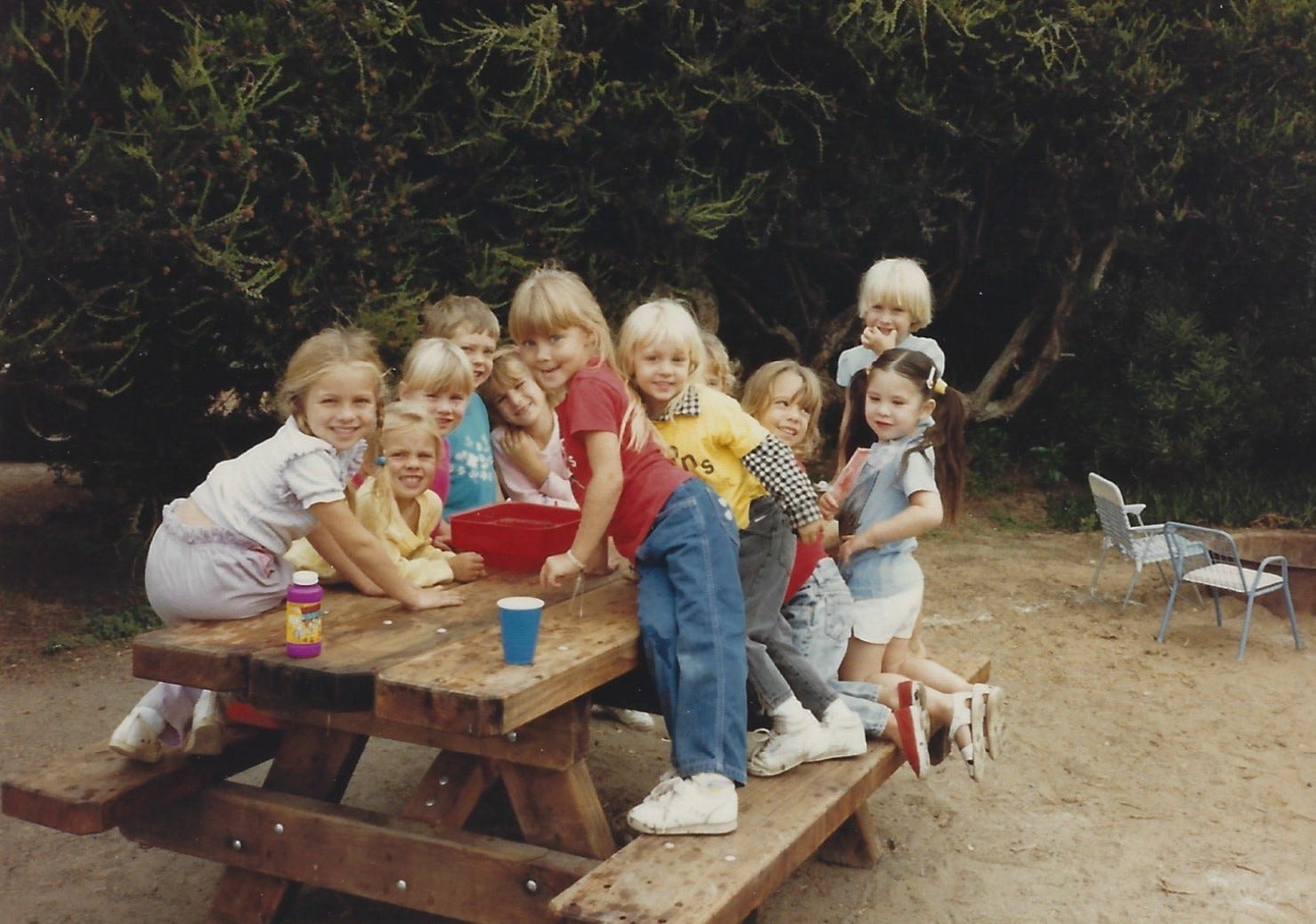
On reflection, some clear themes have emerged in my writing over the past decade. Ideas about race, identity, and belonging are ever present in my work. I think this has a lot to do with who I am and how I grew up. My multiracial identity and the way that other people respond to it has fascinated me for as long as I can remember. I was raised to be proud of my Chinese and Irish lineage, but that hasn’t stopped other people from trying to tell me who I am. The journey to understanding my place in this country naturally began by delving into my Chinese American heritage, the aspect of myself that is constantly being called into question or outright dismissed—because I supposedly don’t look Chinese.
I have explored this topic through essays on growing up mixed race in an Asian American enclave of Southern California and on visiting my grandma’s ancestral home in southern China. In 2017, I launched Thank You Enjoy, a multimedia project highlighting the lives of Chinese restaurant workers in New York, which yielded a TED Talk titled “As American as Chop Suey,” a deeply reported article for The Ringer, a photo exhibition that has traveled to seven cities, and an award-winning zine (which you can order a copy of here).
My work on Chinese American identity culminated with Not Your China Doll. The book was intended not only to restore AMW’s legacy as a pioneer of early Hollywood, but also to serve as an intimate study of race and the Asian American experience. Yet even this scholarly pursuit could only take me so far. Anna May, who once crooned the song “Half-Caste Woman” and identified with the “tragic Eurasian” trope of being caught between two worlds, admitted privately that she would never marry any of her white lovers because she didn’t want to birth “half-breed” children. Thinking of her saying those words has always made me wince.
Which brings me to the project I’m currently working on. My next book—or demon, if you will—is a cultural history of mixed race identity in the United States. It’s a topic that has traditionally been addressed by academic literature or from the extremely personal perspective of memoir. I’m hoping to do something a little different and provide both a structural view of the way mixed race people are marginalized and boxed in, as well as an insider’s look with revealing personal stories from my own experiences and those of other mixed race people. The progression from Anna May Wong to mixed race identity isn’t exactly a straight line, but it feels like something I’m uniquely qualified to write about and a logical continuation of the themes I’m most interested in examining.
Even as I was just starting to write Not Your China Doll, the idea for this next book was already percolating. In fact, I named this newsletter Half-Caste Woman because I thought it was the perfect double entendre. In the AMW universe, it’s a reference to a song written by Noël Coward that AMW sang as part of her European cabaret act in the 1930s. It’s also an outdated, derogatory term for a mixed race person like me who lacks a clear “caste assignment.” Admittedly, half-caste is an uncomfortable word and that’s why I’ve always been drawn to it. I would never use it to describe myself, but there’s this part of me that wants to throw this terrible word—invented to talk about mixed race people, not to us—back into people’s faces and then watch them squirm.
Well, I don’t want you to squirm too much! The point is that sometimes it takes a fresh reframing of the facts or what we think we know to get at the truth. That’s what I aim to keep doing with this newsletter. If you enjoy reading deep dives into the tangled up annals of American history and pop culture, and how these stories continue to echo into the present, I think you’ll continue to find a lot to explore here. I hope you’ll come along with me on this next chapter of Half-Caste Woman’s evolution.
Updates in Brief

Later this month, I’ll be appearing in conversation with friend and colleague Anu Gupta, author of Breaking Bias: Where Stereotypes and Prejudices Come From, at the Museum of Chinese in America. We’ll be discussing race and belonging in Asian America as an extension of MOCA’s current exhibition, Kip Fulbeck’s Hapa.me - 25 Years of the Hapa Project, which explores Hapa identity through portraiture. If you’re in the New York area, get your tickets here and join us on February 26, 6:30 pm for this vital conversation.

In other fun news, I’m now selling sets of my #StarringAnnaMayWong postcards, which you may have seen given away at my book events. Using the AI art generator Midjourney, I reimagined Anna May Wong as the leading lady in popular Hollywood films like Breakfast at Tiffany’s, Wonder Woman, and of course, The Good Earth. So many people have asked me over the last two years how they can get a full set of the postcards. Well, ask and you shall receive! #StarringAnnaMayWong Series 1, a set of 10 postcards, is now available for purchase on Metalabel. Get ‘em while they last!
All the best in your new ventures! There will be many, many exciting stories for you to discover and share.
Looking forward to this. Im half Chinese and half German Irish, and im exploring all of this through the lens of my mother's kitchen in Dumpling therapy (forthcoming, St Martins). Id love to be in conversation! My husband is Mexican so my own daughter ia doubly mixed but feels "Asian" (she's ten). Its an interesting question -i teach at Michigan ans we dont really have classes on mixed race people (I teach China).